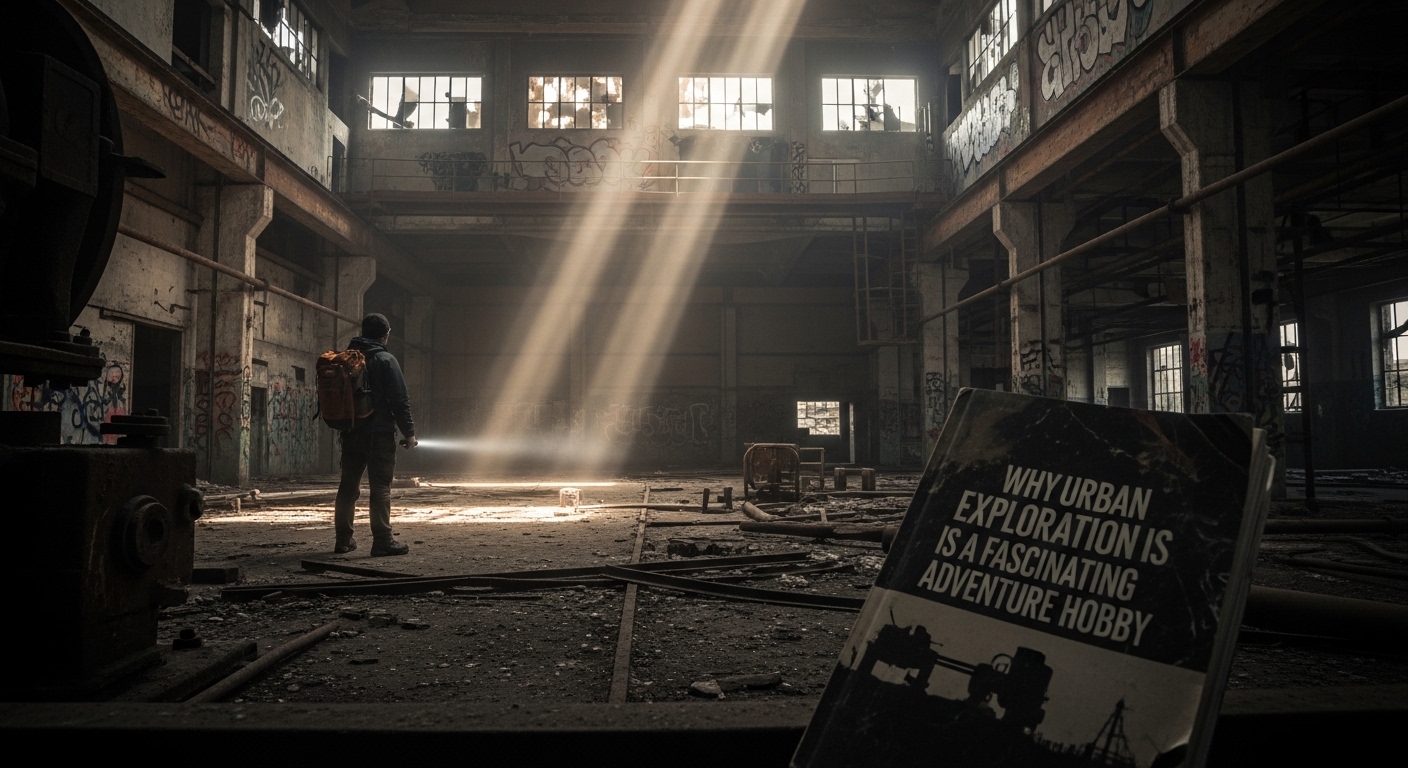
Urban exploration is an adventure hobby that involves discovering and documenting abandoned places, hidden locations, and forgotten structures within cities or remote areas. Often shortened to “urbex,” this activity attracts explorers who are curious about historical architecture, neglected infrastructure, and the mysterious atmosphere of places that are no longer in regular use.
For many enthusiasts, urban exploration is more than just visiting empty buildings. It is an opportunity to uncover hidden stories behind locations that once served important roles in society. Old factories, abandoned hospitals, forgotten railway stations, and unused tunnels all hold traces of history that explorers seek to understand.
Another important aspect of urban exploration is exploration photography. Many explorers carry cameras to capture images of decaying architecture, broken windows, rusted machinery, and nature slowly reclaiming man-made spaces. These photographs often highlight the beauty found in abandoned environments and preserve the visual history of places that may eventually disappear.
Urban exploration has grown in popularity due to online communities, photography platforms, and travel blogs that share fascinating discoveries from around the world. This growing interest has transformed urbex into a widely recognized adventure hobby.
Historical Background of Exploring Abandoned Places
The concept of exploring abandoned places is not entirely new. Historians, archaeologists, and researchers have long been interested in examining old structures to understand past civilizations and cultural developments. However, urban exploration as a recreational activity began gaining attention during the late twentieth century.
As industrialization changed cities and older buildings became unused, many structures were left behind or forgotten. Factories closed, railways were relocated, and certain neighborhoods were abandoned due to economic changes. These locations gradually became intriguing destinations for curious explorers.
During the 1980s and 1990s, small groups of explorers began documenting abandoned locations and sharing their discoveries through magazines and online forums. These early communities focused on exploring hidden infrastructure such as tunnels, rooftops, and underground systems.
With the rise of digital photography and social media, urban exploration became even more visible. Photographers began sharing striking images of decaying architecture and atmospheric environments. These images sparked curiosity among viewers who were fascinated by the mysterious beauty of forgotten places.
Today, urban exploration communities exist across the globe, and enthusiasts continue to document hidden locations while studying their historical significance.
Types of Locations Explored in Urban Exploration
Urban explorers visit a wide variety of locations that have been abandoned, restricted, or overlooked by the general public. Each type of location offers a different experience and historical background.
The following table highlights some of the most commonly explored locations in urban exploration.
| Location Type | Description | Attraction for Explorers |
|---|---|---|
| Abandoned factories | Old industrial facilities | Industrial history and architecture |
| Empty hospitals | Former medical institutions | Atmospheric interiors |
| Forgotten railway stations | Disused transportation hubs | Historical infrastructure |
| Underground tunnels | Hidden city passageways | Mystery and exploration |
| Abandoned amusement parks | Closed entertainment venues | Unique visual scenes |
Each of these environments provides opportunities for exploration photography and historical discovery. Some locations feature remarkable architectural designs, while others reveal how nature gradually reclaims abandoned structures.
Explorers often research the history of these sites before visiting them. Understanding the original purpose of a location adds depth to the exploration experience and helps preserve its historical significance.
Role of Exploration Photography
Exploration photography is a major part of the urban exploration hobby. Photographers use their cameras to capture the unique atmosphere found in abandoned places. These images often highlight dramatic contrasts between decay and beauty.
Lighting conditions inside abandoned buildings can create striking visual effects. Sunlight streaming through broken windows, dust particles floating in the air, and peeling paint on old walls all contribute to the distinctive aesthetic of urbex photography.
Photographers often focus on textures and details that reflect the passage of time. Rusted machinery, cracked floors, and faded signage reveal how environments change when they are no longer maintained.
Many explorers share their photographs online, allowing audiences to see locations that are otherwise inaccessible. These images help document places that may eventually be demolished or renovated, preserving their visual history.
Urban exploration photography has also influenced modern art and storytelling. Some photographers create entire visual narratives that depict the rise and decline of industrial or urban environments.
Skills and Preparation for Urban Exploration
Although urban exploration is an exciting adventure hobby, it requires careful preparation and awareness of safety considerations. Exploring abandoned locations can present challenges such as unstable structures, dark environments, or restricted areas.
Many experienced explorers research locations thoroughly before visiting them. Historical records, maps, and local information help them understand the layout and condition of a site. Proper planning reduces the risks associated with exploring unfamiliar environments.
Safety equipment is also important. Explorers often carry flashlights, protective gloves, sturdy footwear, and first aid supplies. These tools help ensure that they can navigate environments safely while documenting their discoveries.
Respect for locations is another essential principle of urban exploration. Many explorers follow the guideline “take nothing, leave nothing.” This means they avoid damaging or removing objects from the site, preserving its historical integrity.
Responsible explorers also respect local laws and property boundaries. Ethical exploration ensures that abandoned places are treated with care rather than being vandalized or exploited.
Cultural Appeal of Hidden Locations
The fascination with hidden locations is one of the main reasons urban exploration continues to attract new enthusiasts. Abandoned spaces often evoke feelings of mystery, curiosity, and nostalgia. Walking through a forgotten building can feel like stepping into a moment frozen in time.
These locations also reveal how cities evolve over decades. Buildings that once served important roles may eventually become obsolete as technology and society change. Urban exploration highlights these transitions and encourages reflection on the lifecycle of urban development.
For many explorers, discovering hidden places offers a sense of adventure that is difficult to find in everyday environments. The thrill of uncovering unknown spaces and learning about their history adds excitement to the experience.
Urban exploration also encourages appreciation for architecture and engineering. Even in their decayed state, abandoned structures often display remarkable craftsmanship and design.
Final Thought
Urban exploration has become a fascinating adventure hobby that combines curiosity, historical discovery, and exploration photography. By visiting abandoned places and hidden locations, explorers uncover forgotten stories embedded within urban landscapes. Through responsible exploration and documentation, urban explorers help preserve the memory of these spaces while sharing the mysterious beauty of environments that time has left behind.