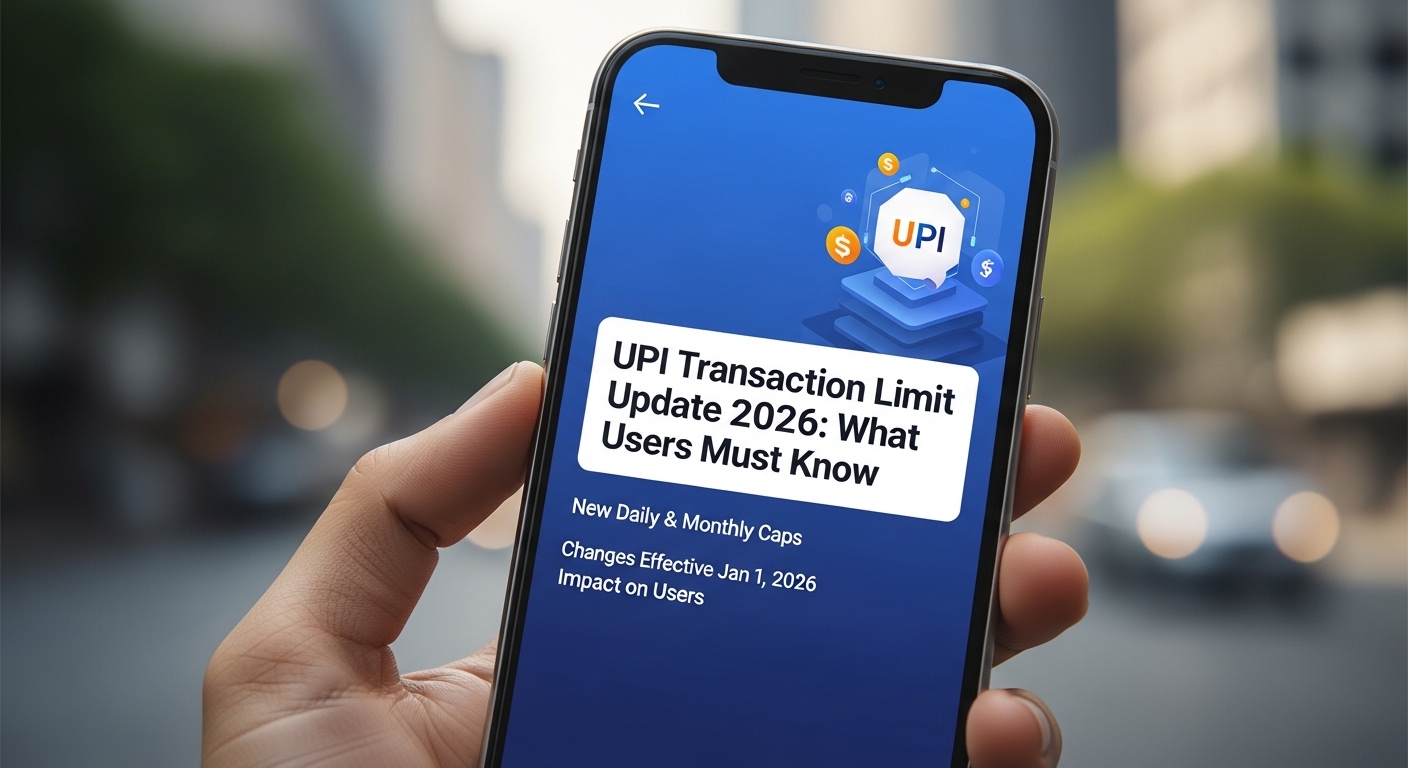
The UPI transaction limit update 2026 has become an important topic for millions of digital payment users in India. Unified Payments Interface (UPI) has transformed the country’s financial ecosystem by enabling instant bank-to-bank transfers through mobile devices. With rapid adoption across individuals, businesses, and merchants, regulatory authorities periodically review transaction limits and operational guidelines to ensure security, scalability, and risk control. Updates to UPI daily limit structures and RBI digital payments rules directly affect how users send and receive money in everyday transactions.
As digital payments expand into high-value transfers such as investments, bill payments, and merchant transactions, transaction caps play a crucial role in balancing convenience and fraud prevention. The UPI transaction limit update 2026 reflects evolving usage patterns, technological capacity, and regulatory oversight. Understanding these limits helps users plan payments efficiently while complying with banking and platform rules. The update also signals continued growth of India’s digital payments infrastructure.
Current UPI Daily Limit Structure and Changes
UPI transactions are governed by limits set by both regulators and participating banks or payment apps. Traditionally, most UPI platforms allowed up to ₹1 lakh per day per user across transactions. Certain categories such as capital markets, insurance, or IPO payments had higher limits under specific guidelines. The UPI transaction limit update 2026 aims to refine these thresholds based on transaction type, risk category, and user verification levels.
Banks and payment apps may implement differentiated limits for peer-to-peer transfers, merchant payments, and verified high-value categories. For example, payments to verified merchants or government services may carry higher caps than personal transfers. RBI digital payments rules encourage such segmentation to support economic activity while minimizing misuse risk. Users should note that daily limits may apply per bank account, per app, or per transaction depending on platform configuration.
The table below summarizes typical UPI daily limit categories after the 2026 update framework.
| Transaction Type | Typical Daily Limit | Purpose |
|---|---|---|
| Peer-to-peer transfer | Up to ₹1 lakh | Personal payments |
| Merchant payment | Up to ₹2–5 lakh (app/bank dependent) | Retail/business |
| IPO/market payments | Higher category limit | Investments |
| Government services | Higher verified limit | Taxes/fees |
| First-time payee | Lower initial cap | Fraud control |
These categories illustrate how UPI transaction limit update 2026 adapts limits to transaction context.
RBI Digital Payments Rules and Security Rationale
RBI digital payments rules play a central role in defining transaction limits and safeguards within the UPI ecosystem. As digital payment volumes increase, regulators prioritize fraud prevention, consumer protection, and system stability. Transaction caps limit potential financial loss in case of unauthorized access or account compromise. The UPI transaction limit update 2026 reflects ongoing regulatory emphasis on risk-based controls.
Security considerations include authentication strength, device verification, and behavioral monitoring. Higher transaction limits are typically permitted only after enhanced verification or established transaction history. For example, payments to newly added beneficiaries may carry lower limits initially. This staged approach reduces fraud risk while allowing legitimate usage to expand over time.
Regulatory oversight also ensures interoperability across banks and apps. Uniform limit frameworks prevent inconsistencies that could confuse users or create vulnerabilities. RBI digital payments rules therefore balance innovation with systemic safety. The 2026 update continues this approach by refining limit categories rather than imposing uniform caps.
Impact on Everyday UPI Users and Businesses
The UPI transaction limit update 2026 affects both individual users and merchants relying on digital payments. For everyday users, understanding updated UPI daily limit structures helps manage large transfers such as rent payments, tuition fees, or group transactions. Users may need to split payments across days or accounts if exceeding caps. Awareness prevents transaction failures and inconvenience.
Merchants and small businesses benefit from higher verified merchant limits introduced in recent updates. Digital payments for retail purchases, services, or e-commerce transactions often exceed peer-to-peer thresholds. Enhanced merchant caps support business growth and reduce reliance on cash or card infrastructure. The update therefore strengthens UPI’s role as a comprehensive payment platform.
Financial inclusion is another impact area. UPI enables users without credit cards to conduct digital transactions securely. Appropriate limit structures ensure accessibility while protecting vulnerable users from fraud. The UPI transaction limit update 2026 thus supports both economic activity and consumer protection in India’s digital economy.
How Users Can Manage Limits and Transactions
Users can manage UPI daily limit constraints through several practical steps. Linking multiple bank accounts within a UPI app distributes transaction capacity across accounts. If one account reaches its daily cap, another may still allow transfers. Understanding bank-specific limits is important because caps may vary across institutions or apps.
Planning large payments in advance helps avoid exceeding limits unexpectedly. Users can check remaining transaction allowance within app interfaces before initiating transfers. For recurring high-value payments such as fees or investments, using verified merchant channels may allow higher limits than peer transfers. These strategies align usage with updated RBI digital payments rules.
Security awareness also remains critical. Users should verify beneficiaries, avoid sharing authentication credentials, and enable device security features. Transaction limits function as safety layers but do not replace cautious behavior. Combining user vigilance with system safeguards ensures safe and efficient digital payments under the 2026 update.
Future Outlook for UPI Transaction Limits
The evolution of UPI transaction limits reflects the rapid expansion of India’s digital payments ecosystem. As UPI adoption grows across retail, commerce, and financial services, transaction categories will likely become more specialized. Higher limits for verified and regulated activities may expand, while safeguards for personal transfers remain strong. The UPI transaction limit update 2026 represents a step toward context-based payment regulation.
Technological advancements such as real-time fraud detection and behavioral analytics may enable dynamic limits tailored to user profiles. Instead of fixed caps, systems could adjust allowable amounts based on transaction history and risk assessment. Such innovations would enhance both convenience and security.
India’s leadership in digital payments suggests continued refinement of RBI digital payments rules to support economic growth. UPI transaction limits will evolve alongside new use cases such as cross-border payments, credit integration, and large-value digital commerce. Users should expect periodic updates as the ecosystem matures.
Final Thought
The UPI transaction limit update 2026 is an important development shaping how digital payments operate in India. By refining UPI daily limit categories and aligning them with RBI digital payments rules, the update balances convenience, security, and economic activity. Understanding these limits helps users and businesses manage transactions effectively while benefiting from India’s advanced digital payment infrastructure.