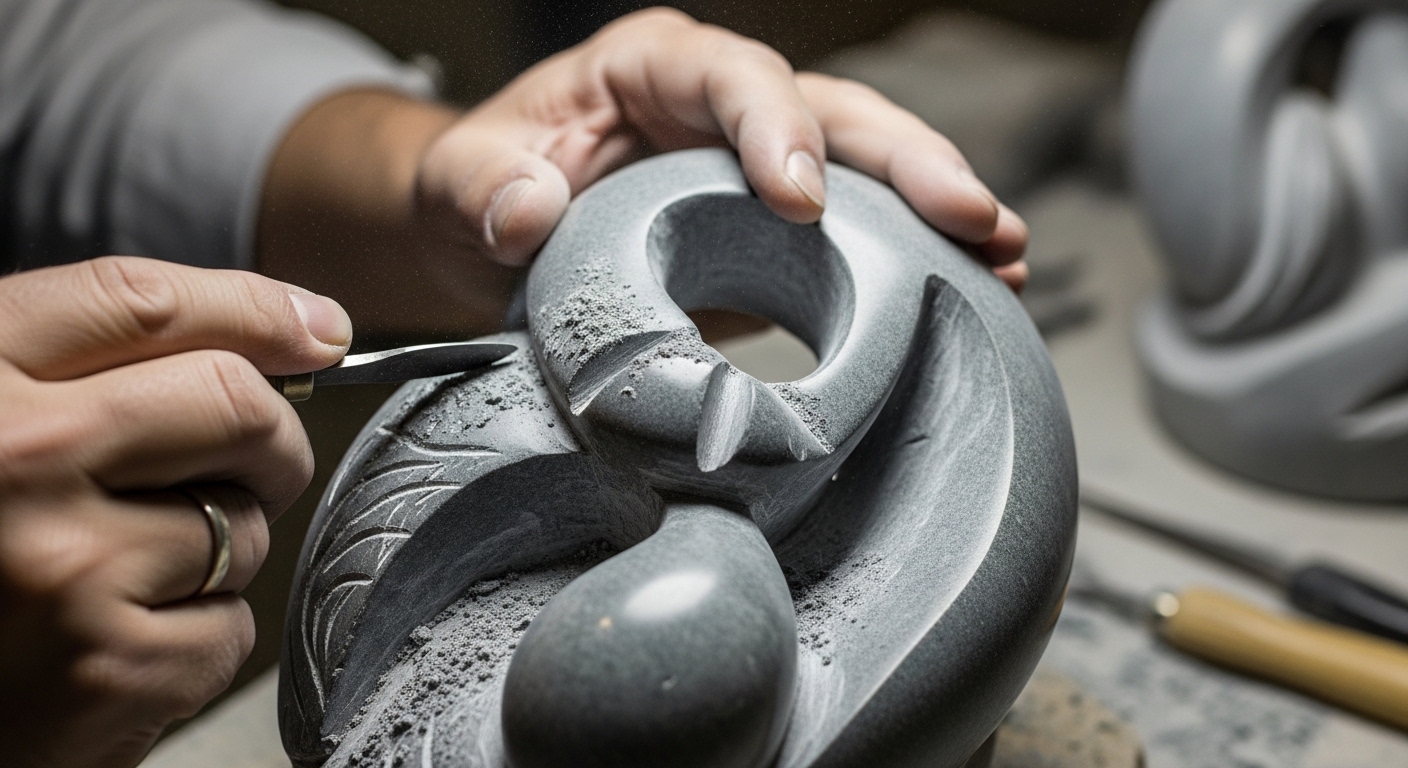
Soapstone carving is a traditional and widely practiced form of stone carving that allows artists to create smooth, detailed sculptures with relative ease compared to harder stones. Known for its softness and fine texture, soapstone is an ideal material for both beginners and experienced sculptors. This craft has been practiced for centuries and continues to thrive as an important form of sculpture art and handmade crafts.
The growing interest in handcrafted and artistic creations has brought renewed attention to soapstone carving. Artists appreciate the material’s versatility, which allows them to experiment with intricate designs and refined finishes. As a result, soapstone carving has become a popular medium for creating decorative objects, figurines, and functional art pieces. Its ability to combine simplicity with elegance makes it a standout practice within modern handmade crafts.
Understanding Soapstone Carving and Carving Techniques
Soapstone carving involves shaping and refining soapstone using various carving techniques and tools. The process typically begins with selecting a suitable piece of soapstone, which is then marked with the desired design. Artists use tools such as chisels, rasps, and knives to remove material and shape the sculpture.
One of the key advantages of soapstone carving is the material’s softness, which allows for precise detailing without requiring heavy machinery. This makes it accessible for artists working in small studios or home environments. Carving techniques can range from basic shaping to intricate detailing, depending on the complexity of the design.
Regions like Kisii are well known for their soapstone carving traditions, where artisans create a wide range of sculptures that reflect cultural themes and craftsmanship. These practices highlight the importance of soapstone carving as both an artistic and cultural activity.
After shaping, the sculpture is sanded and polished to achieve a smooth finish. This step enhances the natural beauty of the stone and gives the final piece its characteristic soft texture. The ability to achieve such refined results makes soapstone carving a preferred choice for many artists in sculpture art.
Benefits of Soapstone Carving in Handmade Crafts
One of the main benefits of soapstone carving is its accessibility. The softness of the material makes it easier to work with compared to other types of stone carving, allowing beginners to learn carving techniques more quickly. This accessibility has contributed to its popularity as a creative hobby and professional craft.
Soapstone carving also offers a high level of creative freedom. Artists can experiment with different shapes, patterns, and textures to create unique pieces of sculpture art. This flexibility encourages innovation and artistic expression within handmade crafts.
Another advantage is the aesthetic appeal of soapstone. Its smooth surface and natural color variations add elegance and sophistication to finished sculptures. These qualities make soapstone carving suitable for both decorative and functional items, such as bowls, figurines, and ornaments.
Additionally, soapstone carving can be a therapeutic activity. The process of shaping and refining the stone requires focus and patience, which can have a calming effect. This makes it an enjoyable and rewarding practice for individuals seeking relaxation through creative activities.
Comparison Table: Soapstone Carving vs Other Stone Carving Methods
| Feature | Soapstone Carving | Other Stone Carving |
|---|---|---|
| Material Hardness | Soft and easy to carve | Hard and requires more effort |
| Tools Required | Basic carving tools | Advanced tools and machinery |
| Skill Level | Beginner-friendly | Often requires advanced skills |
| Detail Precision | High due to softness | Limited by hardness of material |
| Time Required | Moderate | Longer for harder stones |
| Application | Sculpture art and handmade crafts | Architecture and large sculptures |
This comparison shows how soapstone carving stands out as an accessible and versatile form of stone carving. While harder stones offer durability, soapstone provides ease of use and detailed craftsmanship.
Challenges and Limitations in Soapstone Carving
Despite its advantages, soapstone carving has certain limitations. One of the main challenges is the durability of the material. Because soapstone is relatively soft, it can be more prone to scratches and damage compared to harder stones. Artists must handle their creations carefully to maintain their quality.
Another challenge is the need for proper finishing techniques. Achieving a smooth and polished surface requires careful sanding and attention to detail. Beginners may need time to master these carving techniques and achieve professional results.
Material availability can also be a concern in some regions. While soapstone is widely used in certain areas, it may not be easily accessible everywhere. Artists may need to source materials from specialized suppliers.
Additionally, while soapstone carving is beginner-friendly, creating highly detailed and complex sculptures still requires practice and experience. Developing advanced skills in sculpture art takes time and dedication.
The Future of Soapstone Carving in Modern Sculpture Art
The future of soapstone carving looks promising as interest in handmade crafts and sustainable art continues to grow. Artists and designers are increasingly incorporating natural materials into their work, and soapstone carving fits well within this trend.
Technological advancements are also influencing the craft. Modern tools and techniques allow for greater precision and efficiency, enabling artists to explore new possibilities in sculpture art. This combination of traditional methods and modern innovation is expanding the potential of soapstone carving.
Educational programs and workshops are helping to preserve and promote this craft. By teaching carving techniques and encouraging creativity, these initiatives ensure that soapstone carving remains relevant and accessible to future generations.
As global appreciation for handmade crafts increases, soapstone carving will continue to play an important role in the world of sculpture art. Its unique combination of simplicity, versatility, and elegance makes it a valuable and enduring artistic practice.
Final Thoughts
Soapstone carving is a remarkable form of stone carving that allows artists to create smooth and detailed sculptures with ease and precision. Through the use of carving techniques and creative expression, it has become an important part of sculpture art and handmade crafts.
While challenges such as durability and skill development exist, the benefits of soapstone carving make it a rewarding and accessible craft. Its ability to combine tradition with innovation ensures its continued relevance in modern art. As more individuals explore the beauty of handmade creations, soapstone carving will remain a significant and inspiring artistic practice.