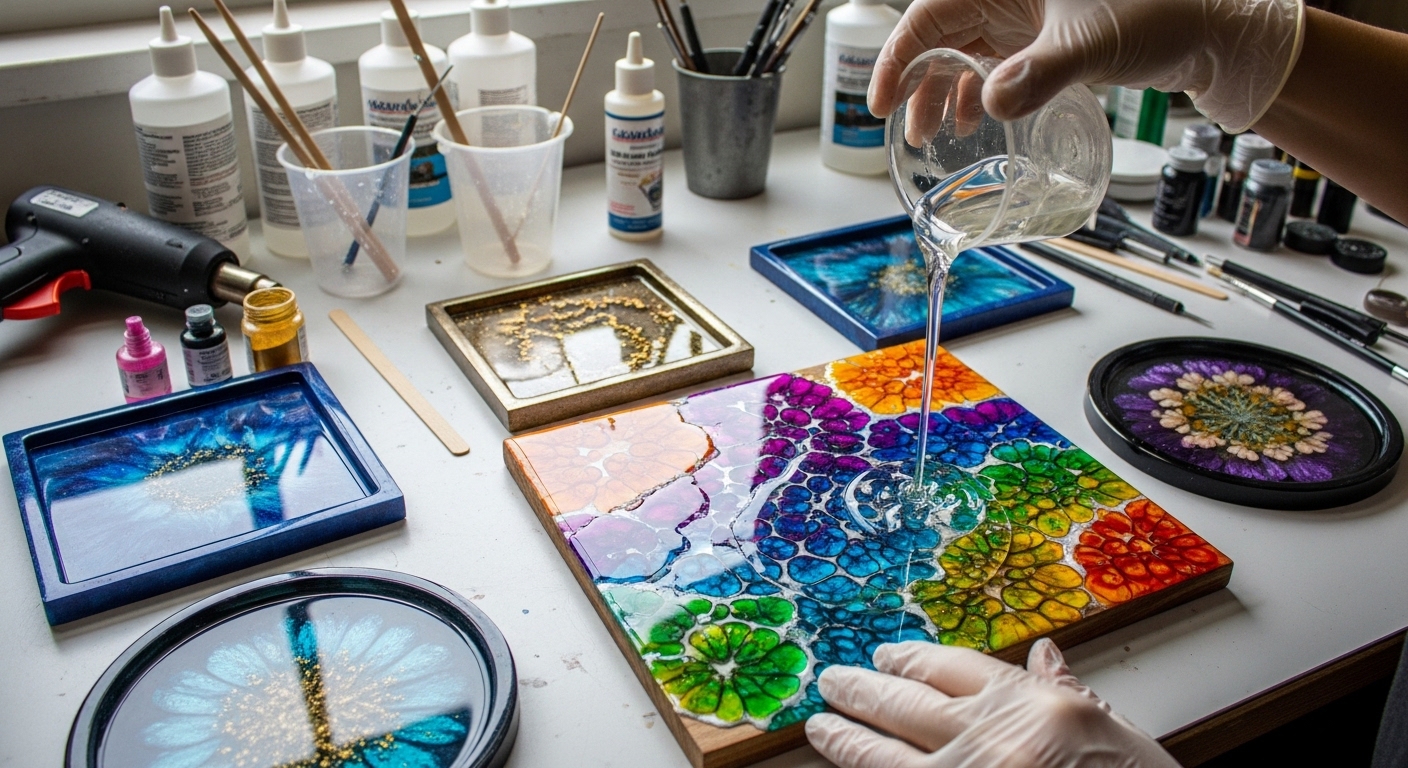
Resin art has rapidly become one of the most popular forms of contemporary creative expression, especially in the world of DIY decor. Known for its glossy finish and vibrant designs, resin art transforms liquid materials into stunning solid pieces. This innovative form of epoxy art is widely used to create decorative items, jewelry, furniture accents, and abstract artworks that appeal to modern aesthetics.
The rise of resin art is closely linked to the growing interest in creative crafts and personalized decor. Unlike traditional art forms, resin art offers a unique combination of fluidity and control, allowing artists to experiment with colors, textures, and patterns. The ability to produce high-gloss, glass-like finishes makes it a standout choice for individuals seeking stylish and contemporary DIY decor solutions.
Understanding Resin Art and Epoxy Art Techniques
Resin art involves mixing epoxy resin with a hardener to create a chemical reaction that transforms the liquid into a durable solid. This process is the foundation of epoxy art, where artists manipulate the resin before it cures to create intricate designs. The versatility of resin allows for a wide range of art techniques, from abstract pouring to detailed layering.
Artists often add pigments, dyes, and metallic powders to the resin to achieve vibrant effects. Techniques such as marbling, geode designs, and ocean wave patterns are commonly used in resin art. These art techniques require careful timing, as the resin must be shaped before it begins to harden.
In many cases, resin art incorporates additional materials such as wood, flowers, or stones to enhance the final piece. This integration of elements adds depth and complexity, making resin art a dynamic form of creative crafts. By mastering epoxy art techniques, artists can create unique and visually striking pieces that stand out in modern DIY decor.
Benefits of Resin Art in Creative Crafts and DIY Decor
One of the main benefits of resin art is its aesthetic appeal. The glossy and polished finish of epoxy art creates a luxurious look that enhances any space. This makes it a popular choice for DIY decor projects, including tabletops, coasters, and wall art.
Resin art also offers a high level of creative freedom. Artists can experiment with colors, patterns, and materials to create one-of-a-kind designs. This flexibility makes it an exciting and engaging activity within creative crafts.
Another advantage is the durability of resin. Once cured, epoxy art pieces are resistant to moisture and wear, making them suitable for both decorative and functional use. This durability adds value to handmade items and ensures their longevity.
Additionally, resin art can be a rewarding creative outlet. The process of designing and crafting pieces allows individuals to express their creativity and develop new skills. As a result, resin art has become a popular hobby and professional pursuit in the world of DIY decor.
Comparison Table: Resin Art vs Traditional Painting
| Feature | Resin Art | Traditional Painting |
|---|---|---|
| Medium | Epoxy resin and hardener | Paint (acrylic, oil, etc.) |
| Finish | Glossy and glass-like | Matte or semi-gloss |
| Durability | Highly durable and مقاistant | Varies depending on medium |
| Techniques | Pouring, layering, embedding | Brushwork and blending |
| Skill Level | Moderate with learning curve | Beginner to advanced |
| Application | DIY decor and functional items | Canvas and visual art |
This comparison shows how resin art differs from traditional painting by offering unique textures and finishes. While painting focuses on brush techniques, epoxy art emphasizes fluid movement and chemical processes.
Challenges and Safety Considerations in Resin Art
Despite its popularity, resin art comes with certain challenges. One of the primary concerns is the handling of materials. Epoxy resin requires careful mixing and precise measurements to ensure proper curing. Mistakes in the process can lead to sticky or uneven results.
Safety is also an important consideration. Resin materials can release fumes during the curing process, so proper ventilation and protective equipment are essential. Artists must follow safety guidelines to minimize risks and ensure a safe working environment.
Another challenge is controlling the flow of resin. Since it is a liquid medium, achieving precise designs can be difficult. Artists must develop their skills in managing timing and movement to create desired effects.
Additionally, resin art can be time-consuming. The curing process may take several hours or even days, requiring patience and planning. Despite these challenges, the results are often highly rewarding, making the effort worthwhile.
The Future of Resin Art in Modern Design
The future of resin art looks promising as interest in innovative and personalized decor continues to grow. Designers and artists are exploring new applications of epoxy art, including furniture design, interior installations, and wearable art. This expansion is pushing the boundaries of creative crafts and redefining modern aesthetics.
Technological advancements are also influencing resin art. New materials and tools are making the process more efficient and accessible, allowing artists to achieve greater precision and creativity. These developments are encouraging more people to explore resin art as a creative hobby.
Social media platforms have played a significant role in popularizing resin art. Artists share their work and techniques with global audiences, inspiring others to experiment with DIY decor projects. This visibility is contributing to the rapid growth of resin art as a mainstream creative practice.
Educational resources and workshops are further supporting the development of resin art. By teaching art techniques and safety practices, these programs ensure that the craft continues to evolve and thrive.
Final Thoughts
Resin art is a dynamic and innovative form of creative expression that transforms simple materials into glossy and visually stunning decorative pieces. Through the use of epoxy art and advanced art techniques, artists can create unique designs that enhance modern DIY decor.
While challenges such as material handling and safety exist, the benefits of resin art make it a highly rewarding craft. Its versatility, durability, and aesthetic appeal ensure its continued popularity in the world of creative crafts. As more individuals explore this art form, resin art will remain a key trend in modern design and artistic innovation.