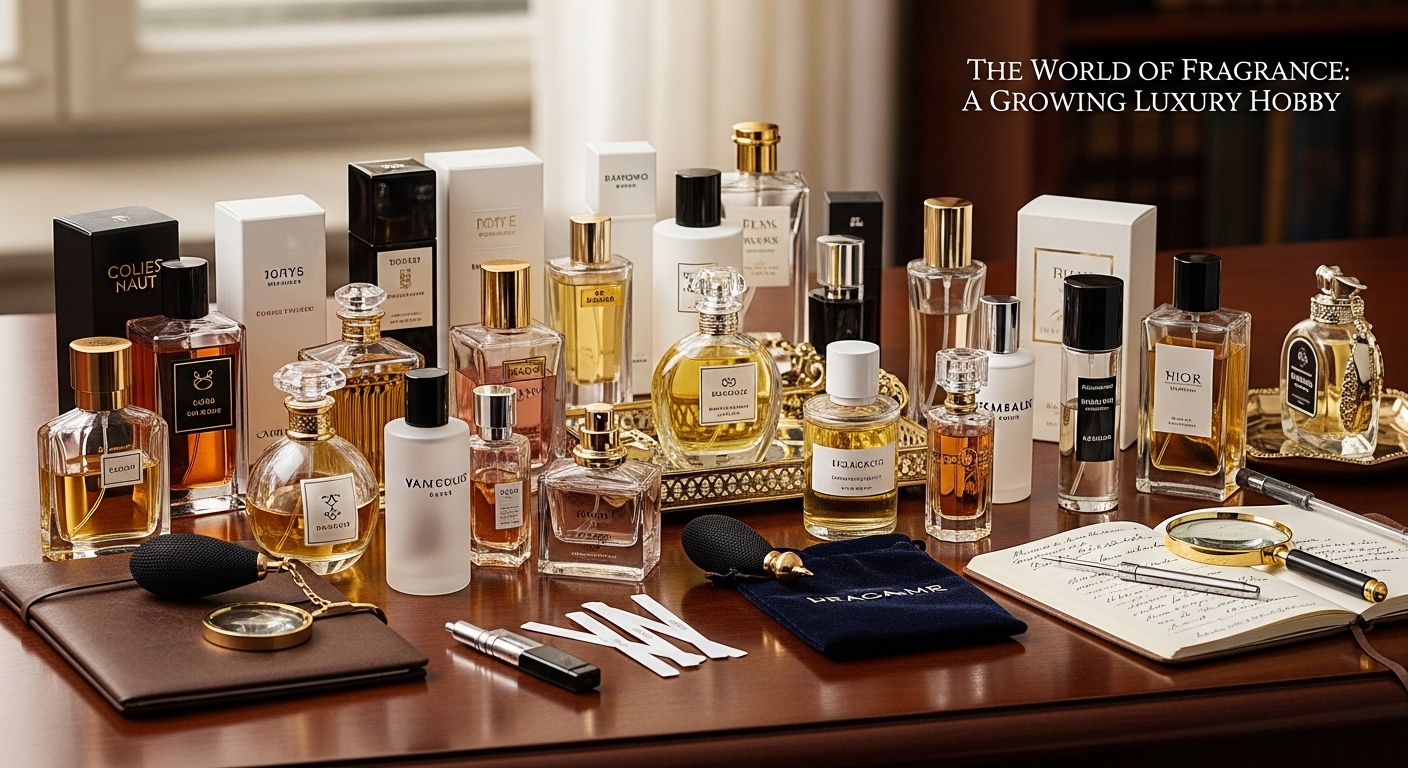
Perfume collecting has evolved into a sophisticated and growing luxury hobby embraced by enthusiasts across the world. Unlike simply buying fragrances for daily use, perfume collecting involves curating a thoughtful selection of scents that reflect personal taste, artistic appreciation, and cultural awareness. This perfume hobby has gained popularity as people begin to recognize fragrance as a form of self-expression and sensory art.
Fragrances are more than pleasant smells. They carry emotional, cultural, and aesthetic value. A single perfume can evoke memories, represent moods, or reflect identity. As a result, collectors often build fragrance collections that serve as personal scent libraries, each bottle representing a unique experience.
The rise of luxury scents and niche perfumery has further fueled interest in perfume collecting. With increasing availability of exclusive and artisanal fragrances, collectors now have access to a wide variety of scent profiles, making the hobby both exciting and diverse.
Historical Evolution of Fragrance Appreciation
The use of perfumes dates back thousands of years to ancient civilizations such as Egypt, Mesopotamia, and India. Early perfumes were created using natural ingredients like flowers, herbs, and resins. These fragrances were used in religious rituals, personal grooming, and ceremonial practices.
In ancient Egypt, perfumes were highly valued and often associated with status and spirituality. Similarly, in ancient Rome and Greece, fragrances were used in baths and daily life as symbols of refinement and luxury.
During the Renaissance and later periods in Europe, perfume making evolved into a refined art. France, in particular, became a global center for perfumery, with artisans developing complex blends and techniques.
Today, scent appreciation continues to evolve as modern perfumers experiment with innovative ingredients and compositions. This rich history contributes to the appeal of perfume collecting, as each fragrance connects collectors to centuries of artistic and cultural tradition.
Types of Fragrances in Collections
Perfume collectors often organize their fragrance collections based on scent categories, concentration levels, and usage occasions. Understanding these categories helps collectors build diverse and balanced collections.
The following table highlights common types of fragrances found in perfume collections.
| Fragrance Type | Characteristics | Usage |
|---|---|---|
| Eau de parfum | Strong concentration of fragrance oils | Long-lasting daily wear |
| Eau de toilette | Lighter concentration | Casual use |
| Perfume oil | Highly concentrated and long-lasting | Special occasions |
| Niche fragrances | Created by independent perfumers | Unique and artistic scents |
| Designer perfumes | Produced by major brands | Widely recognized scents |
Collectors often explore different fragrance families such as floral, woody, oriental, and fresh scents. Each category offers a distinct sensory experience, allowing collectors to choose perfumes based on mood, season, or occasion.
Building a diverse collection enables enthusiasts to appreciate the complexity and variety of modern perfumery.
Art and Science Behind Luxury Scents
Perfume collecting is closely linked to the art and science of fragrance creation. Perfumers, often referred to as “noses,” carefully blend different scent notes to create balanced compositions. These notes are typically categorized into top, middle, and base layers.
Top notes are the initial scents perceived immediately after application. They are usually light and refreshing but fade quickly. Middle notes form the core of the fragrance, while base notes provide depth and longevity.
The process of creating luxury scents involves both creativity and chemistry. Perfumers experiment with natural and synthetic ingredients to achieve specific scent profiles. This combination of artistry and scientific precision makes perfumery a unique field.
Collectors often study fragrance notes and compositions to understand how perfumes evolve over time. This knowledge enhances scent appreciation and allows collectors to identify fragrances that suit their preferences.
Some collectors also focus on limited edition releases or vintage perfumes, which add rarity and historical value to their collections.
Growth of Perfume Collecting as a Global Hobby
The popularity of perfume collecting has grown significantly due to increased awareness of niche perfumery and global access to fragrance brands. Online platforms, reviews, and social media have made it easier for enthusiasts to discover new perfumes and share their experiences.
Perfume communities have formed around the world, where collectors discuss fragrance notes, compare collections, and recommend scents. These communities help beginners learn about the hobby while providing experienced collectors with new insights.
Luxury brands have also contributed to the growth of perfume collecting by releasing exclusive fragrances and limited editions. These releases create excitement among collectors who seek unique additions to their fragrance collections.
In addition, perfume exhibitions and events allow enthusiasts to explore new scents and meet perfumers. These events highlight the artistic and cultural aspects of fragrance creation.
The accessibility of perfumes across different price ranges also allows people to enter the hobby at various levels, from affordable collections to high-end luxury scents.
Emotional and Personal Value of Fragrance Collections
One of the most unique aspects of perfume collecting is its emotional connection. Fragrances are closely linked to memory and emotion. A particular scent can remind someone of a place, person, or moment in time.
Collectors often associate specific perfumes with personal experiences, making their collections deeply meaningful. Unlike other hobbies, perfume collecting engages the sense of smell, which is strongly connected to memory and emotion.
Fragrance collections also allow individuals to express their identity. Different scents can reflect different moods or personalities, allowing collectors to choose fragrances that match their feelings or occasions.
The act of selecting and wearing a fragrance becomes a personal ritual that enhances daily life. For many enthusiasts, perfume collecting is not just about owning bottles but about experiencing and appreciating the art of scent.
Final Thought
Perfume collecting has become a growing luxury hobby that blends art, culture, and personal expression. Through fragrance collections, scent appreciation, and exploration of luxury scents, enthusiasts discover the depth and beauty of modern perfumery. As interest in sensory experiences continues to expand, perfume collecting remains a captivating hobby that transforms simple fragrances into meaningful and memorable experiences.