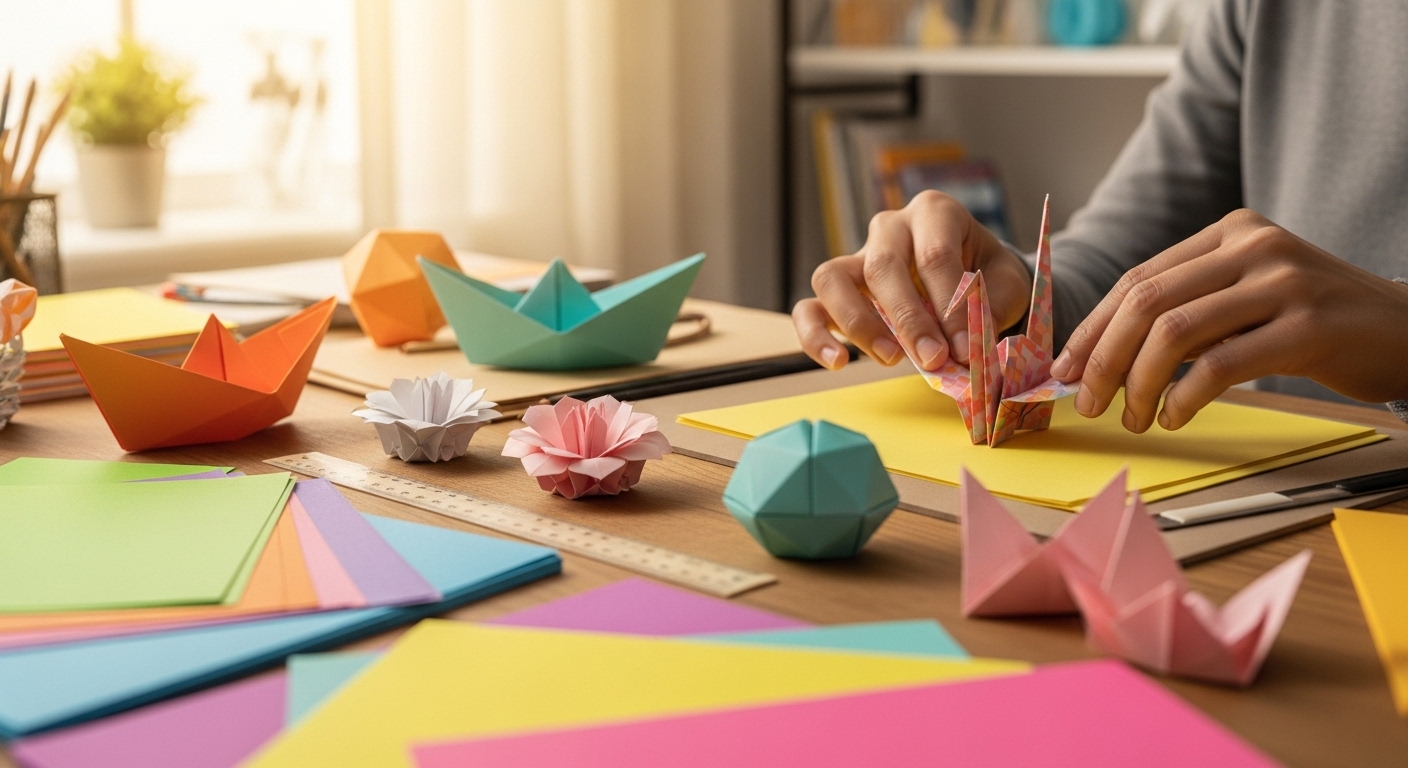
Origami paper art is a fascinating craft that transforms simple sheets of paper into intricate shapes and artistic designs through the technique of paper folding. Originating from Japan, Japanese origami has evolved into a global art form enjoyed by people of all ages. From delicate animals and flowers to complex geometric structures, origami demonstrates how creativity can emerge from the simplest materials.
The appeal of origami paper art lies in its accessibility and creativity. All that is required is a piece of paper and a willingness to learn the folding process. Unlike many creative crafts that require specialized tools or expensive materials, origami allows beginners to start practicing immediately. This simplicity makes it one of the most widely practiced art hobbies across the world.
Beyond its artistic beauty, origami offers significant educational and psychological benefits. Practicing paper folding helps develop patience, concentration, and problem-solving skills. As individuals follow folding sequences and create increasingly complex designs, they cultivate both creativity and discipline. For these reasons, origami paper art is widely used in educational environments, art therapy programs, and creative workshops.
History and Cultural Origins of Japanese Origami
The history of Japanese origami dates back several centuries and is closely connected to the cultural traditions of paper craftsmanship in Japan. Paper itself was introduced to Japan from China around the sixth century, and over time it became widely used for writing, religious ceremonies, and decorative arts.
In early Japanese culture, folded paper objects were often used in ceremonial contexts. For example, certain folded designs were used in Shinto rituals and cultural celebrations. As paper became more affordable and accessible, origami gradually developed as a recreational art form practiced by families and children.
During the twentieth century, origami paper art gained international recognition thanks to influential artists and educators who introduced structured folding techniques and design systems. Origami masters began creating new models and publishing instructional books that allowed people around the world to learn paper folding techniques.
Today, Japanese origami is celebrated as both a traditional cultural art and a modern creative craft. Artists continue to innovate with new folding methods while honoring the historical roots of this remarkable art form.
Basic Tools and Materials for Paper Folding
One of the most appealing aspects of origami paper art is that it requires very few materials. Unlike many other creative crafts, origami focuses on precision and technique rather than complex equipment.
The table below highlights common materials used in origami paper folding.
| Origami Material | Purpose | Benefit |
|---|---|---|
| Origami paper | Specially designed square paper | Easy folding and durability |
| Colored paper | Adds visual appeal to designs | Enhances artistic expression |
| Patterned paper | Decorative paper for creative models | Unique artistic results |
| Bone folder tool | Helps create sharp folds | Improves folding precision |
| Instruction guides | Diagrams showing folding steps | Supports learning process |
Although specialized origami paper is commonly used, beginners can practice with regular square sheets of paper. The key factor in successful origami is the accuracy of each fold rather than the type of paper used.
How Origami Encourages Creativity
Origami paper art is widely recognized for its ability to stimulate creativity and imagination. Each folding sequence transforms a flat piece of paper into a three-dimensional structure. This transformation encourages individuals to think creatively about shapes, symmetry, and spatial relationships.
Many artists use origami as a medium for creative exploration. By experimenting with different folds and patterns, they create original designs that reflect their artistic vision. Some advanced origami artists even design complex sculptures that resemble animals, insects, or architectural forms.
Creative crafts like origami also encourage experimentation and innovation. Beginners often start by following step-by-step diagrams for traditional models such as cranes or flowers. As their skills improve, they may begin modifying designs or inventing new models of their own.
Educational programs frequently incorporate origami into art and mathematics lessons because it encourages creative problem solving. Students learn to visualize geometric transformations and understand how simple shapes can evolve into complex structures.
Origami also demonstrates that creativity does not require expensive materials. A simple sheet of paper can become a work of art through imagination and careful folding.
Development of Patience and Focus Through Origami
Another important benefit of origami paper art is the development of patience and concentration. Many origami models require multiple precise folds that must be completed in a specific sequence. Skipping steps or folding inaccurately can disrupt the entire structure.
As a result, practicing paper folding teaches individuals to slow down and focus on each step of the process. This deliberate approach helps cultivate mindfulness and attention to detail. Many people find that origami provides a calming experience similar to meditation.
Learning complex origami designs also requires perseverance. Beginners may need several attempts to master a particular model. However, the sense of accomplishment that comes from completing a challenging design can be very rewarding.
Teachers and therapists often use origami activities to help individuals improve concentration and motor coordination. The repetitive folding motions strengthen fine motor skills while encouraging careful observation.
Origami also promotes a sense of achievement. Each completed model represents a successful combination of creativity, patience, and technical skill.
Modern Applications of Origami in Art and Science
Although origami paper art began as a traditional craft, it has influenced many modern fields beyond art hobbies. Scientists, engineers, and designers have discovered that origami principles can be applied to technological innovations.
In engineering, origami-inspired structures are used to design foldable products such as compact furniture, portable shelters, and space equipment. For example, some satellite components are designed using folding patterns that allow them to expand once deployed in space.
In medical science, researchers have explored origami-inspired designs for tiny surgical tools and foldable medical devices. These innovations demonstrate how the principles of paper folding can inspire creative solutions to complex engineering challenges.
Artists and architects also draw inspiration from origami when designing sculptures, buildings, and installations. The geometric patterns and folding techniques used in origami create visually striking designs that influence modern art and architecture.
These developments highlight the remarkable versatility of origami paper art. What began as a simple cultural craft has evolved into a source of inspiration for both creative expression and scientific innovation.
Final Thought
Origami paper art demonstrates how the simple practice of paper folding can nurture creativity, patience, and artistic expression. Rooted in the traditions of Japanese origami, this timeless craft continues to inspire people around the world through creative crafts and art hobbies. By transforming ordinary paper into intricate designs, origami encourages imagination, concentration, and appreciation for the beauty that can emerge from simplicity.