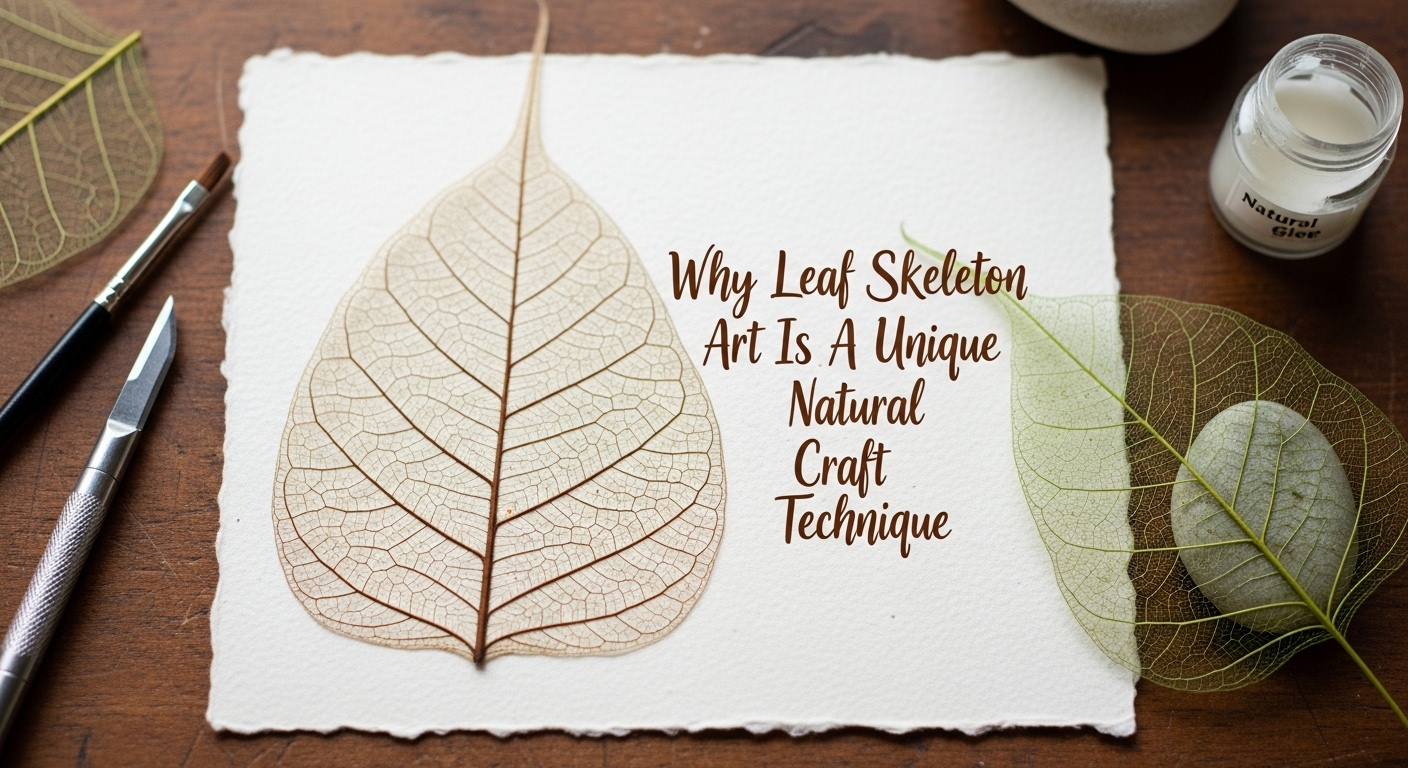
Leaf skeleton art is a delicate and fascinating form of nature art that transforms ordinary leaves into intricate, lace-like structures. By removing the soft tissues of the leaf and preserving the vein network, artists create detailed designs that highlight the natural patterns of plant life. This technique has gained popularity as a unique branch of botanical art and eco crafts.
The appeal of leaf skeleton art lies in its ability to reveal the hidden beauty of nature. Each leaf has a unique vein structure, making every piece of artwork one-of-a-kind. As interest in sustainable and nature-inspired creativity grows, leaf skeleton art has become a preferred choice for individuals exploring leaf crafts and handmade designs. Its simplicity combined with elegance makes it a standout form of eco crafts.
Understanding Leaf Skeleton Art and Botanical Techniques
Leaf skeleton art involves a careful process of removing the soft parts of a leaf while preserving its delicate vein structure. The process typically begins with selecting suitable leaves, such as those with strong and prominent veins. These leaves are then soaked in water or a mild solution to break down the softer tissues.
Once the leaf is softened, artists gently brush away the pulp, revealing the intricate skeleton beneath. This requires patience and precision, as the veins are fragile and can easily break. After cleaning, the skeleton is dried and sometimes bleached or dyed to enhance its appearance.
Botanical art techniques play a crucial role in shaping leaf skeleton art. Artists often incorporate additional elements such as pressed flowers, paints, or frames to create decorative compositions. Regions like Kerala, known for their rich biodiversity, provide inspiration for creating detailed and vibrant nature art using leaves.
By mastering these techniques, artists can create a variety of eco crafts, from greeting cards and bookmarks to wall art and decorative pieces. The intricate patterns of leaf skeleton art make it a valuable addition to botanical art practices.
Benefits of Leaf Skeleton Art in Eco Crafts
One of the main benefits of leaf skeleton art is its sustainability. As a form of eco crafts, it uses natural and biodegradable materials, reducing environmental impact. This aligns with the growing demand for eco-friendly art and design.
Leaf skeleton art also offers unique aesthetic appeal. The delicate and intricate patterns of leaf veins create visually striking designs that are difficult to replicate with synthetic materials. This makes it a highly valued form of nature art.
Another advantage is its accessibility. Leaf skeleton art requires minimal tools and materials, making it suitable for beginners. This simplicity encourages more people to explore botanical art and creative hobbies.
Additionally, leaf skeleton art provides a calming and therapeutic experience. The process of working with natural materials and focusing on delicate details helps reduce stress and improve concentration. This makes it a rewarding activity within eco crafts.
Comparison Table: Leaf Skeleton Art vs Pressed Leaf Crafts
| Feature | Leaf Skeleton Art | Pressed Leaf Crafts |
|---|---|---|
| Technique | Removing leaf tissue to reveal veins | Flattening and drying leaves |
| Visual Style | Intricate and lace-like patterns | Solid and natural leaf shapes |
| Material Processing | Requires soaking and cleaning | Simple pressing method |
| Durability | Fragile but long-lasting with care | More durable |
| Artistic Detail | High level of detail | Moderate detail |
| Application | Decorative and botanical art | General leaf crafts and decor |
This comparison highlights how leaf skeleton art differs from other leaf crafts. While pressed leaves retain their full structure, leaf skeleton art focuses on revealing the intricate internal patterns of nature.
Challenges and Considerations in Leaf Skeleton Art
Despite its beauty, leaf skeleton art comes with certain challenges. One of the main difficulties is the delicate nature of the material. The vein structure can easily break during the cleaning process, requiring careful handling and patience.
Another challenge is selecting suitable leaves. Not all leaves are ideal for skeletonizing, and finding the right type may require experimentation. Leaves with strong veins and firm structures tend to produce better results in botanical art.
The process itself can also be time-consuming. Soaking, cleaning, and drying leaves may take several days, depending on the method used. This requires patience and planning, especially for larger projects.
Additionally, preserving the final artwork requires proper care. Exposure to moisture, sunlight, or physical damage can affect the quality of leaf skeleton art. Using protective frames or coatings can help maintain its longevity.
The Future of Leaf Skeleton Art in Nature-Based Creativity
The future of leaf skeleton art looks promising as interest in eco crafts and sustainable design continues to grow. Artists and designers are increasingly incorporating natural materials into their work, recognizing the value of nature art in modern aesthetics.
Innovations in preservation and coloring techniques are expanding the possibilities of leaf skeleton art. Artists are experimenting with dyes and mixed media to create vibrant and contemporary designs. This evolution is enhancing its appeal within botanical art.
Social media platforms are playing a significant role in promoting leaf skeleton art. Artists share their creations with global audiences, inspiring others to explore this unique craft. This increased visibility is contributing to its growing popularity.
Educational programs and workshops are also supporting the development of leaf skeleton art. By teaching techniques and encouraging creativity, these initiatives ensure that the craft continues to evolve and attract new enthusiasts.
Final Thoughts
Leaf skeleton art is a unique and elegant form of nature art that reveals the intricate beauty of leaves through creative techniques. As part of botanical art and eco crafts, it offers a sustainable and visually striking approach to handmade design.
While challenges such as fragility and time investment exist, the benefits of leaf skeleton art make it a rewarding and inspiring activity. Its ability to combine natural materials with artistic expression ensures its continued relevance. As more individuals embrace eco-friendly creativity, leaf skeleton art will remain a cherished and evolving craft in the world of nature-based design.