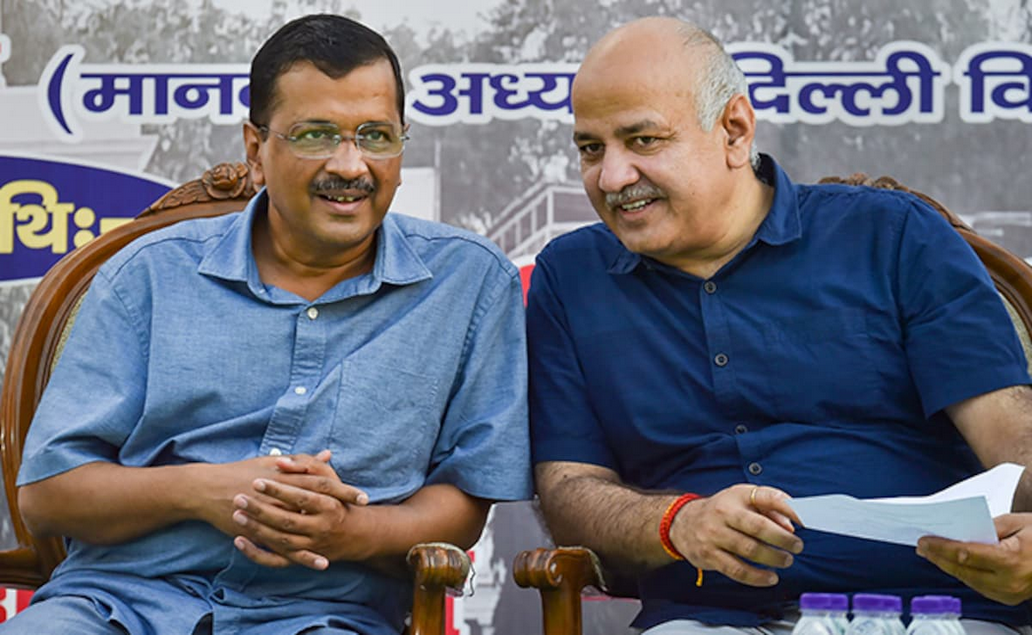
The Arvind Kejriwal liquor policy case verdict has become a major political and legal development in India, drawing nationwide attention. The Delhi liquor policy case, which involved allegations of irregularities in the formulation and implementation of a new excise policy, led to investigations, arrests, and prolonged legal proceedings. Former Delhi Deputy Chief Minister Manish Sisodia and Delhi Chief Minister Arvind Kejriwal were central figures in the case due to their roles in policy decisions. The recent CBI court decision clearing them has significantly reshaped the political narrative and legal interpretation surrounding the controversy.
The case began as an administrative reform initiative aimed at restructuring liquor retail in Delhi. However, allegations of corruption, favoritism, and procedural violations led to criminal investigations by central agencies. Over time, the case evolved into a high-profile political issue, with opposition parties and the ruling Aam Aadmi Party presenting contrasting claims. The verdict clearing Kejriwal and Sisodia has prompted strong reactions across political, legal, and public spheres.
Background of the Delhi Liquor Policy Case
The Delhi liquor policy case originated from the introduction of a new excise policy by the Delhi government intended to modernize liquor sales and increase revenue. The policy proposed privatization of retail outlets and restructuring of licensing zones. While the government argued that reforms would reduce black-market sales and improve regulation, critics alleged that the policy favored certain private entities and caused revenue loss.
Investigations were initiated following complaints and reports suggesting procedural irregularities in license allocation and fee waivers. Central agencies including the Central Bureau of Investigation examined policy drafting, approval processes, and financial implications. Manish Sisodia, who oversaw the excise department, became a primary focus of investigation. Arvind Kejriwal’s role was scrutinized due to his leadership position and alleged involvement in decision-making.
The policy was eventually withdrawn by the Delhi government amid controversy, but legal proceedings continued. Arrests, interrogations, and court hearings extended over months, making the case one of the most politically charged legal disputes in recent years.
Timeline of Key Events in the Case
The progression of the Delhi liquor policy case involved multiple investigative and judicial stages. The timeline below summarizes major developments leading to the verdict.
| Date/Period | Event | Significance |
|---|---|---|
| Policy launch | New excise policy announced | Liquor retail reform |
| Complaints filed | Allegations of irregularities | Investigation trigger |
| CBI probe begins | Central investigation initiated | Legal scrutiny |
| Manish Sisodia arrest | Deputy CM detained | Political escalation |
| Policy withdrawn | Government cancels reform | Controversy peak |
| Court hearings | Evidence examined | Judicial process |
| Verdict announced | Kejriwal & Sisodia cleared | Case outcome |
This sequence highlights how administrative reform evolved into a prolonged legal and political confrontation culminating in the court decision.
Legal Findings and CBI Court Decision
The CBI court decision clearing Arvind Kejriwal and Manish Sisodia centered on evaluation of evidence, procedural legality, and intent. The court examined whether policy decisions constituted criminal misconduct or corruption under applicable laws. Key considerations included documentation of policy formulation, approval channels, and financial outcomes. The defense argued that policy changes fell within legitimate administrative discretion and lacked evidence of personal gain or illegal conspiracy.
According to the verdict, the prosecution failed to establish sufficient proof linking the accused to criminal wrongdoing in the Delhi liquor policy case. The court emphasized the distinction between policy decisions and criminal liability, noting that administrative reforms may be controversial without constituting offenses. Absence of direct evidence of bribery or unlawful benefit played a major role in the acquittal outcome.
The Manish Sisodia update following the verdict indicated restoration of legal standing after prolonged detention and trial. The judgment also clarified legal thresholds for attributing criminal intent in policy-making processes. This interpretation may influence future cases involving administrative decisions and political accountability.
Political Reactions and Public Response
The Arvind Kejriwal liquor policy case verdict triggered immediate political reactions across parties. Leaders of the Aam Aadmi Party described the decision as vindication of their governance approach and accused opponents of politically motivated allegations. Statements emphasized that policy reform had been misrepresented and that legal clearance affirmed administrative integrity. Supporters highlighted Sisodia’s return to public life and reaffirmed confidence in leadership.
Opposition parties responded with skepticism, questioning investigative and judicial conclusions. Some critics argued that policy controversy remained unresolved despite legal acquittal. Political discourse reflected broader tensions between central and state leadership structures in India’s federal system. The case therefore continued to influence political narratives even after the court decision.
Public reaction was diverse, reflecting differing political affiliations and perceptions of governance. Some citizens viewed the verdict as proof of accountability through judicial process, while others remained concerned about policy transparency. Social media discussion amplified both support and criticism, illustrating how high-profile legal cases intersect with public opinion and political identity.
Implications for Governance and Policy Reform
Beyond individual outcomes, the Delhi liquor policy case and verdict carry broader implications for governance and policy-making in India. Administrative reforms often involve economic restructuring and regulatory change, which can generate controversy. The case highlights the legal scrutiny applied to policy decisions and the importance of procedural clarity and documentation. Governments may adopt more cautious approaches to reform initiatives to avoid allegations of irregularity.
The verdict also underscores judicial standards for evaluating policy-related criminal allegations. Distinguishing between flawed policy and criminal misconduct remains a complex legal challenge. Future governance decisions may be shaped by lessons from the case regarding transparency, stakeholder consultation, and accountability mechanisms. The outcome may encourage policymakers to strengthen compliance processes during reform implementation.
Politically, the acquittal may influence electoral narratives and leadership perceptions. Restoration of reputation following legal clearance can reshape public trust and political dynamics. The Manish Sisodia update and Kejriwal’s legal position may affect party strategy and policy priorities. Thus, the case’s impact extends beyond courtroom outcomes into governance discourse.
Final Thought
The Arvind Kejriwal liquor policy case verdict marks a significant moment in India’s intersection of politics, policy reform, and legal accountability. The Delhi liquor policy case, involving prolonged investigation and controversy, concluded with a CBI court decision clearing both Kejriwal and Manish Sisodia. While legal findings resolved criminal allegations, political and public debates continue to shape interpretation of the events. The case illustrates how administrative decisions, legal scrutiny, and political narratives interact in democratic governance.