Emotional intelligence is the ability to understand, manage, and express emotions in a healthy and effective way. It is not about suppressing feelings or pretending to be strong all the time. Instead, emotional intelligence helps people recognize their emotions, understand why they feel a certain way, and respond thoughtfully rather than reacting impulsively. Emotional intelligence also involves understanding the emotions of others, showing empathy, communicating clearly, and building meaningful connections. In both personal and professional life, emotional intelligence helps improve relationships, reduce conflicts, and support personal growth. When emotional intelligence is strong, life becomes more balanced, decisions become clearer, and interactions become healthier.
Why Emotional Intelligence Plays a Big Role in Personal Growth
Personal growth depends heavily on emotional intelligence. Many challenges in life are not caused by lack of knowledge or skill, but by difficulty handling emotions such as anger, fear, stress, or insecurity. Emotional intelligence helps individuals stay calm in pressure situations, handle conflicts maturely, and stay motivated even when life becomes difficult. Self awareness, which is a key part of emotional intelligence, allows individuals to understand their strengths and weaknesses. This awareness supports self-improvement because it encourages honesty and growth instead of denial or avoidance. Emotional intelligence also strengthens confidence as people learn to trust their emotions and manage them wisely. The more emotionally intelligent a person becomes, the stronger their personal growth journey becomes.
Key Components of Emotional Intelligence and Why They Matter
Emotional intelligence includes several important components that work together to build stronger emotional skills. Each component supports emotional balance, better communication, and improved relationships. The table below highlights these key components and their benefits.
| Component of Emotional Intelligence | Description | Benefit |
|---|---|---|
| Self Awareness | Understanding your emotions | Improves clarity and control |
| Self Regulation | Managing reactions and impulses | Prevents emotional mistakes |
| Empathy | Understanding others’ feelings | Strengthens relationships |
| Social Skills | Communicating and interacting well | Builds better connections |
| Motivation | Staying driven and positive | Supports personal growth |
These components make emotional intelligence practical and useful in everyday life. When practiced regularly, they help people live more peacefully and confidently.
Building Self Awareness as the Foundation of Emotional Intelligence
Self awareness is the heart of emotional intelligence because it helps individuals recognize what they feel and why they feel it. Without self awareness, emotions control decisions instead of supporting them. Building self awareness involves observing thoughts, recognizing emotional triggers, and understanding personal reactions. Journaling feelings, reflecting on daily experiences, and practicing mindfulness help develop deeper understanding of emotions. Honest self-reflection helps identify behavior patterns, strengths, and areas that need improvement. When people become more aware of themselves, they gain better emotional control, think more clearly, and respond wisely instead of reacting impulsively. Self awareness creates emotional maturity and supports both personal and professional success.
Developing Emotional Skills to Handle Daily Situations Better
Emotional skills strengthen emotional intelligence and make daily life easier to manage. These skills help people communicate effectively, resolve conflicts calmly, and maintain emotional balance. Learning to pause before reacting prevents misunderstandings and regret. Active listening is another powerful emotional skill. It helps understand others clearly and reduces conflict. Empathy allows people to connect deeply with others by understanding their feelings and perspectives. Expressing emotions respectfully is also important. It prevents emotional buildup and supports healthy communication. Building these emotional skills requires patience and practice, but the results bring emotional peace, stronger relationships, and better decision-making abilities.
Using Emotional Intelligence in Relationships and Social Life
Emotional intelligence plays a major role in relationships, friendships, family bonds, and social interactions. People with strong emotional intelligence communicate clearly, respect boundaries, and understand emotions better. They do not react aggressively or emotionally during disagreements. Instead, they listen, analyze, and respond calmly. This helps maintain trust and respect in relationships. Emotional intelligence also reduces conflicts because it encourages understanding rather than argument. It helps people express feelings honestly while still being kind and considerate. Emotionally intelligent individuals support others emotionally, make people feel valued, and build stronger connections. These qualities create healthier, happier, and more stable relationships.
Emotional Intelligence in Professional and Work Life
Emotional intelligence is extremely valuable in professional environments. It improves teamwork, leadership, communication, and productivity. Emotionally intelligent employees handle stress better, manage workload calmly, and solve problems constructively. They communicate more clearly, show respect in discussions, and build positive workplace relationships. Leaders with emotional intelligence inspire and motivate others, handle conflicts respectfully, and create supportive work environments. Emotional intelligence also improves decision-making at work because it balances logic with emotional understanding. This combination leads to smarter choices, stronger professional relationships, and better career growth.
Simple Daily Practices to Improve Emotional Intelligence
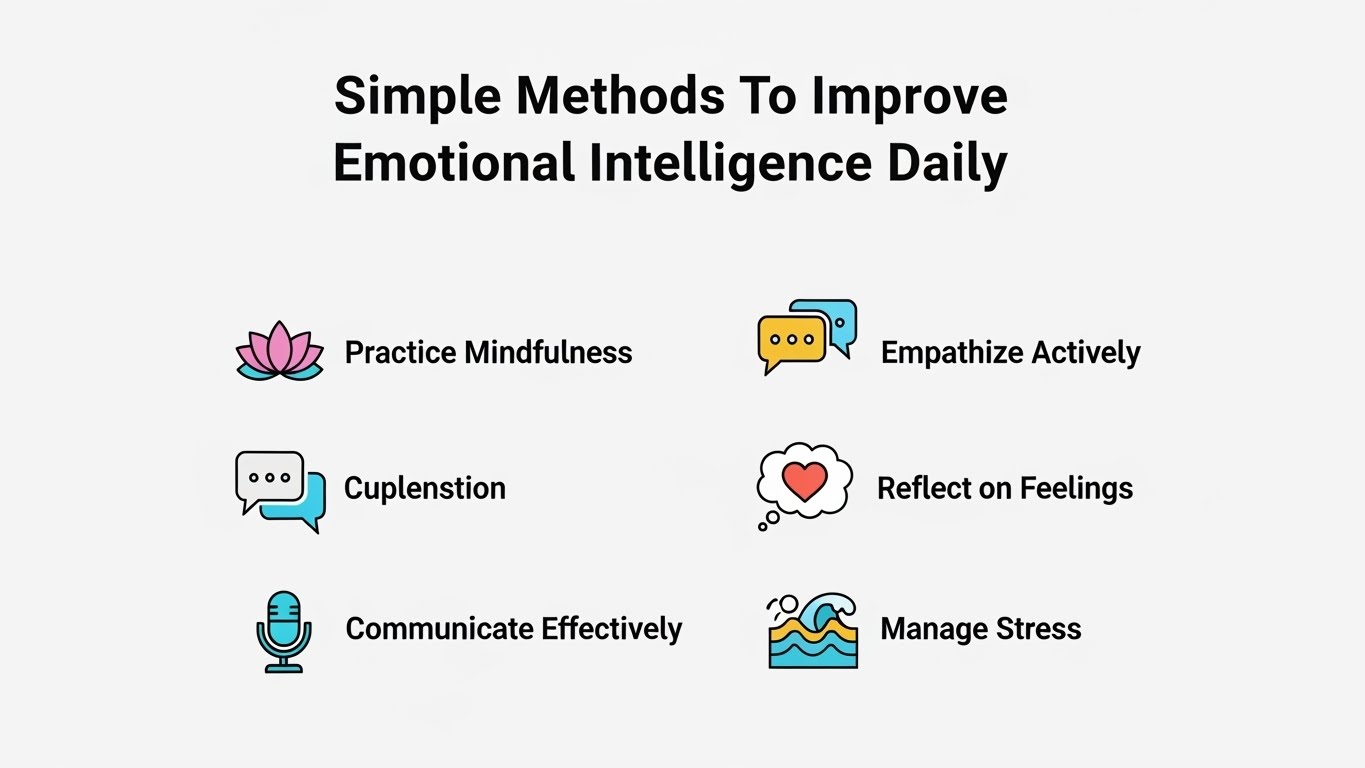
Emotional intelligence improves with consistent practice. Simple daily habits such as pausing before reacting, thinking before speaking, and reflecting after emotional situations build control and wisdom. Practicing empathy daily helps understand others better. Listening carefully, showing kindness, appreciating others, and managing stress thoughtfully all contribute to emotional intelligence. Taking responsibility for actions instead of blaming others also strengthens emotional maturity. Over time, these practices shape a calmer, stronger, and emotionally intelligent personality.
Long-Term Benefits of Strong Emotional Intelligence
Strong emotional intelligence leads to better confidence, healthier relationships, stronger mental balance, and improved personal growth. It helps people face life challenges with strength and clarity. Emotionally intelligent individuals handle stress better, communicate more effectively, and lead happier, more meaningful lives. Emotional intelligence supports success in every area of life because it strengthens both emotional and practical decision-making abilities.
Final Thought
Emotional intelligence is a powerful skill that supports self awareness, emotional skills, and personal growth. By understanding emotions, managing reactions, practicing empathy, and building emotional strength daily, anyone can improve emotional intelligence. With patience, reflection, and consistent effort, emotional intelligence brings peace, clarity, and stronger connections to everyday life.