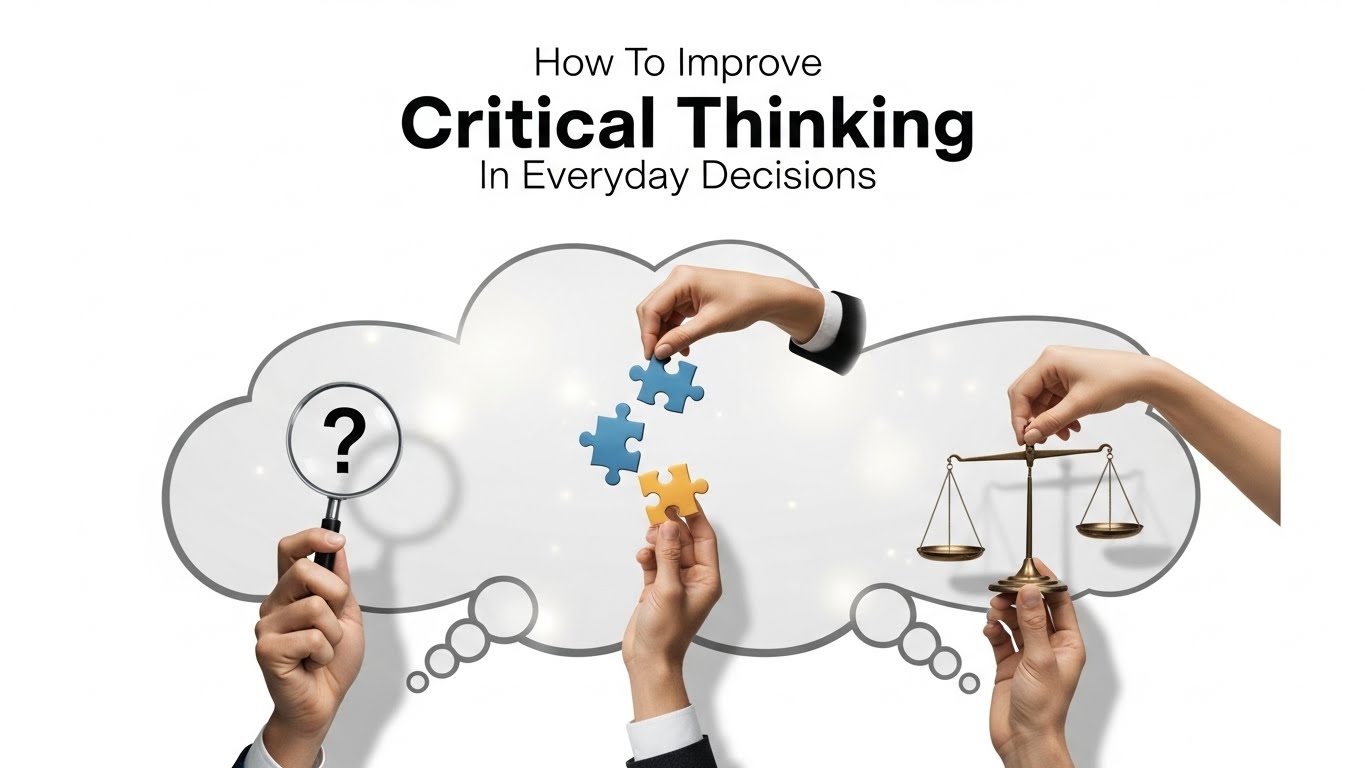
Critical thinking is the ability to analyze situations, understand information deeply, question assumptions, and make logical, well-reasoned decisions. In everyday life, people constantly make choices related to work, relationships, finances, learning, and personal development. Without strong critical thinking skills, decisions may be based on emotions, pressure, assumptions, or misunderstandings. This can lead to mistakes, regrets, and unnecessary stress. When critical thinking improves, individuals become more aware, confident, and capable of solving problems effectively. It strengthens decision making skills and allows people to respond wisely rather than react impulsively. Understanding the importance of critical thinking is the first step toward making smarter, clearer, and more meaningful choices in life.
How Critical Thinking Supports Better Decision Making Skills
Good decision making skills are closely connected to critical thinking. Every decision involves evaluating information, considering consequences, and weighing alternatives. Critical thinking encourages people to slow down and think logically before acting. Instead of relying on guesswork or emotional reactions, individuals begin to analyze situations more carefully. They learn to identify what truly matters, what risks exist, and what benefits each option brings. This approach prevents impulsive decisions and promotes wiser choices. In workplaces, strong decision making skills improve leadership, teamwork, and productivity. In personal life, they help maintain healthy relationships, financial stability, and emotional balance. Critical thinking transforms decision making from a stressful task into a confident, thoughtful process.
Practical Ways to Improve Critical Thinking in Everyday Situations
Improving critical thinking does not require complicated techniques. It develops through consistent practice, curiosity, and reflection. The following table highlights practical ways to improve critical thinking along with their benefits.
| Critical Thinking Strategy | Description | Benefit |
|---|---|---|
| Ask Questions | Question assumptions and explore why things happen | Improves understanding |
| Analyze Information | Look at facts from different perspectives | Supports logical thinking |
| Consider Consequences | Think about long-term impact of decisions | Strengthens decision making |
| Compare Options | Evaluate different choices before acting | Encourages better judgment |
| Reflect Regularly | Review past decisions and lessons learned | Improves future thinking |
Practicing these strategies helps the mind stay active, analytical, and aware. Over time, they make logical thinking more natural and automatic.
The Role of Logical Thinking in Problem Solving
Problem solving is an essential life skill, and critical thinking plays a central role in strengthening it. Logical thinking helps individuals break down complex problems into smaller, manageable parts. Instead of feeling overwhelmed, they can analyze situations step by step. Logical thinking also encourages separating facts from opinions, emotions from realities, and assumptions from truth. This clarity helps in choosing effective solutions. In professional environments, problem solving supported by logical thinking leads to better performance and innovation. In personal life, it helps handle conflicts, challenges, and unexpected situations calmly. When critical thinking and logical thinking work together, problem solving becomes more strategic, confident, and successful.
Developing a Strong and Independent Thinking Mindset
A strong mindset supports critical thinking because it encourages independence, curiosity, and open thinking. Independent thinkers do not follow opinions blindly. They evaluate information, question credibility, and form their own conclusions. This mindset helps protect against misinformation, manipulation, and confusion. Curiosity also plays a powerful role. When people show interest in learning, exploring ideas, and understanding deeper meanings, their thinking naturally becomes sharper. Emotional awareness is equally important. Being aware of emotions prevents them from controlling decisions and helps maintain mental clarity. A balanced mindset combines logic with emotional intelligence, making thinking stronger and more reliable.
Building Daily Habits That Strengthen Critical Thinking
Critical thinking improves most effectively when it becomes part of daily habits. Reading regularly, engaging in thoughtful conversations, analyzing news critically, solving puzzles, and reflecting on daily decisions strengthen the brain’s analytical ability. Writing thoughts, evaluating personal experiences, and learning new skills also enhance thinking capacity. Practicing patience and not rushing decisions helps the brain function more clearly. Another important habit is listening carefully. When people listen fully instead of assuming or reacting quickly, they gain better understanding and make smarter choices. These daily habits gradually build stronger critical thinking skills that benefit every area of life.
Overcoming Common Barriers to Critical Thinking
Several barriers can weaken critical thinking such as emotional reactions, fear of being wrong, social pressure, lack of information, or overconfidence. Emotional reactions can lead to decisions based on anger, fear, or frustration instead of logic. Fear of being wrong prevents people from analyzing situations honestly. Social pressure may push individuals to follow others instead of thinking independently. Overconfidence sometimes causes people to ignore important details. Overcoming these barriers requires humility, patience, and awareness. Accepting that mistakes are part of learning strengthens thinking. Seeking information, staying open-minded, and staying calm help maintain clarity and logical judgment.
Long-Term Benefits of Strong Critical Thinking Skills
Strong critical thinking skills create powerful long-term benefits. They improve communication, leadership, confidence, and decision quality. People with strong critical thinking handle challenges better, stay emotionally balanced, and make smarter choices for their future. They are better problem solvers, better learners, and more successful in personal and professional life. Critical thinking also encourages lifelong learning and continuous self improvement. It shapes a more thoughtful, aware, and capable version of oneself.
Final Thought
Improving critical thinking is one of the most valuable steps toward better decision making, stronger logical thinking, and effective problem solving. By asking questions, analyzing information, developing independent thinking, and practicing daily habits, anyone can strengthen critical thinking skills. With patience and consistency, critical thinking becomes a natural part of everyday life, leading to wiser decisions and greater personal growth.