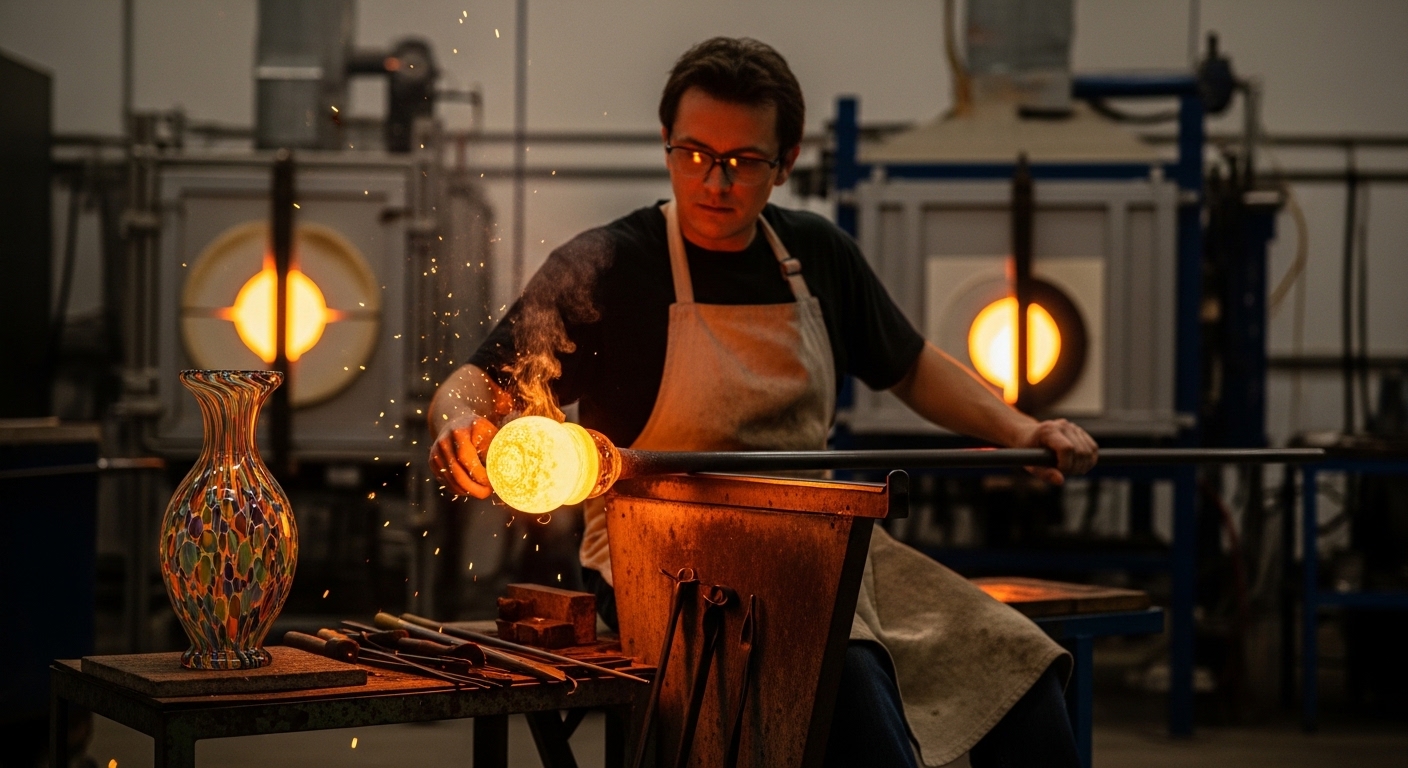
Glass blowing art is one of the most fascinating forms of creative art that combines science, craftsmanship, and artistic imagination. This ancient technique involves shaping molten glass into beautiful objects using heat, air, and specialized tools. From decorative vases and sculptures to functional items like bowls and glassware, handmade glass creations showcase both precision and creativity.
The appeal of glass blowing art lies in its dynamic and transformative nature. Artists work with molten glass heated to extremely high temperatures, often above 1000 degrees Celsius. At this stage, the glass becomes soft and flexible, allowing artisans to shape it into various forms by blowing air through a tube and manipulating it with tools.
Today, glass crafting is widely appreciated as both a traditional craft and a modern artistic medium. Artists continue to experiment with colors, textures, and shapes, creating unique pieces that cannot be replicated by machines. Each handmade glass object reflects the individual style and skill of the artisan, making it truly one of a kind.
Historical Origins of Glass Crafting
The history of glass blowing art dates back over two thousand years to ancient civilizations. The technique is believed to have originated in the Middle East, particularly in regions such as Syria and Egypt, around the first century BCE. Early glassmakers discovered that molten glass could be shaped by blowing air into it through a hollow tube.
This innovation revolutionized glass crafting because it allowed artisans to produce hollow objects more efficiently than previous methods. Glass vessels, bottles, and decorative items became more common and accessible as the technique spread across the Roman Empire.
During the medieval period, glass blowing continued to develop, particularly in regions such as Venice. Venetian glassmakers became renowned for their exceptional craftsmanship and innovation. They developed new techniques for creating intricate designs, colored glass, and delicate forms.
Over time, glass blowing art spread across Europe and other parts of the world. Today, it remains a respected artisan skill practiced by both traditional craftsmen and contemporary artists.
Tools and Materials Used in Glass Blowing
Glass blowing requires specialized tools and materials that allow artisans to work with molten glass safely and effectively. The process involves both heating and shaping, making it essential to use proper equipment.
The following table highlights common tools used in glass blowing art.
| Tool or Material | Purpose | Function |
|---|---|---|
| Blowpipe | Hollow metal tube | Used to gather and blow molten glass |
| Furnace | High-temperature heating chamber | Melts glass to working temperature |
| Marver | Flat surface for shaping | Helps form and smooth glass |
| Jacks | Metal shaping tool | Creates details and curves |
| Punty rod | Holds glass piece during finishing | Supports shaping process |
These tools allow glass artists to manipulate molten glass with precision. The combination of heat and careful handling enables the creation of complex shapes and designs.
Glass materials often include silica sand mixed with other compounds that influence color and texture. By adding metal oxides, artisans can produce vibrant colors such as blue, green, red, and amber.
Techniques Used in Handmade Glass Creation
Glass blowing art involves several techniques that allow artists to transform molten glass into finished products. One of the most fundamental techniques is free blowing, where the artist blows air into molten glass to create a bubble that can be shaped into various forms.
Another technique is mold blowing, where molten glass is placed into a mold and then expanded by blowing air. This method allows for more consistent shapes while still preserving the handmade quality of the object.
Glass artists also use techniques such as layering and color application. By adding different layers of colored glass, they can create patterns, gradients, and decorative effects. Some artisans incorporate textures or engravings to enhance the visual appeal of their creations.
Shaping and reheating are essential parts of the process. As the glass cools, it becomes less flexible, so artists must repeatedly return the piece to the furnace to maintain its workability. This cycle of heating and shaping continues until the desired form is achieved.
The final step involves cooling the glass slowly in a controlled environment to prevent cracking. This process, known as annealing, ensures that the finished piece is durable and stable.
Artistic Value and Creative Expression
Glass blowing art is highly valued for its ability to combine functionality with artistic expression. Each handmade glass object is unique because it reflects the individual decisions made by the artist during the creation process.
Creative art in glass blowing often involves experimentation with shapes, colors, and patterns. Some artists create abstract sculptures that push the boundaries of traditional design, while others focus on producing elegant and functional items.
The transparency and reflective qualities of glass add another dimension to artistic expression. Light passing through or reflecting off glass surfaces can create stunning visual effects that enhance the beauty of the piece.
Glass blowing also encourages spontaneity. Because molten glass is constantly changing as it cools, artists must adapt their techniques in real time. This dynamic process makes each creation a result of both skill and improvisation.
Many glass artists display their work in galleries, exhibitions, and craft fairs, where audiences can appreciate the craftsmanship involved in creating handmade glass objects.
Modern Popularity of Artisan Glass Skills
In recent years, glass blowing art has experienced renewed interest as people seek handmade and unique products. Artisan skills are increasingly valued in a world dominated by mass production. Handmade glass items stand out because of their individuality and craftsmanship.
Workshops and studios now offer glass blowing classes for beginners who want to experience the process firsthand. These classes introduce participants to basic techniques and allow them to create their own glass pieces under professional guidance.
Glass blowing demonstrations are also popular at art festivals and cultural events. Watching an artisan shape molten glass in real time is both educational and visually captivating.
Social media has further contributed to the popularity of glass crafting. Videos showing the transformation of molten glass into finished objects attract millions of viewers and inspire new artists to explore the craft.
As appreciation for handmade products continues to grow, glass blowing art remains an important part of the creative arts community.
Final Thought
Glass blowing art is a remarkable blend of science, craftsmanship, and creative expression. Through glass crafting techniques and artisan skills, artists transform molten materials into stunning handmade glass creations that are both functional and artistic. As interest in creative art and handmade craftsmanship continues to rise, glass blowing remains a timeless and inspiring art form that showcases the beauty of human creativity and skill.