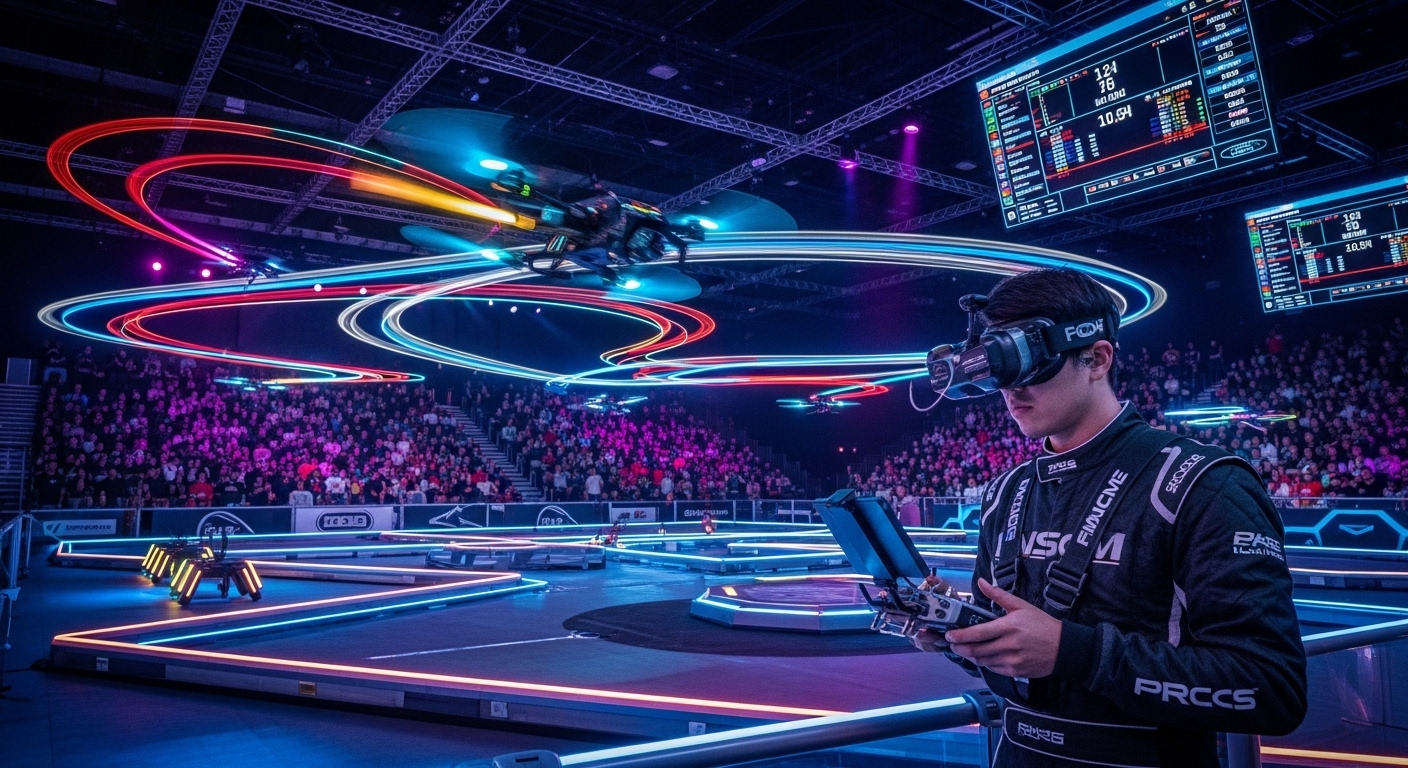
Drone racing has rapidly emerged as one of the most exciting technology-based sports of the modern era. In this thrilling activity, pilots control small high-speed drones as they race through complex obstacle courses at remarkable speeds. These racing drones can reach speeds exceeding 100 kilometers per hour, creating a fast-paced competition that combines technical skill, quick reflexes, and advanced technology.
Unlike traditional drone flying, drone racing typically uses FPV drones, which stands for First Person View drones. These drones transmit live video from onboard cameras directly to the pilot’s goggles or screen. This system allows the pilot to see exactly what the drone sees during the race, creating an immersive aerial racing experience. As a result, drone racing feels similar to sitting inside the drone cockpit while navigating through gates, tunnels, and sharp turns.
Over the past decade, drone racing has evolved from a niche hobby into an organized competitive sport with leagues, tournaments, and international events. Professional pilots, technology enthusiasts, and spectators alike are drawn to the combination of speed, engineering, and digital innovation that defines this unique drone sport.
Origins and Development of Drone Sports
The origins of drone racing can be traced back to the early 2010s when hobbyists began experimenting with custom-built racing drones. As drone technology became more affordable and accessible, enthusiasts started organizing informal competitions in open fields, warehouses, and outdoor tracks.
Early racing events were often organized by local communities of drone builders and pilots. Participants modified their drones to increase speed, improve maneuverability, and reduce weight. These modifications helped create drones specifically designed for racing performance rather than aerial photography or recreational flying.
As interest in drone sports grew, professional organizations began hosting official competitions. One of the most influential developments was the creation of international drone racing leagues that established standardized rules, race formats, and safety guidelines.
Major tournaments soon attracted sponsorship from technology companies and media organizations. These events showcased drone racing as a high-speed competitive sport similar to motorsports but in the air. Spectators watched pilots navigate complex courses filled with neon-lit gates and dramatic obstacles.
Today, drone racing events are held in stadiums, outdoor tracks, and specially designed arenas. Some races even take place inside abandoned buildings or urban environments, adding an element of creativity and challenge to the competition.
Technology Behind Racing Drones
Racing drones are highly specialized machines designed for speed, agility, and durability. Unlike consumer drones used for photography, racing drones prioritize lightweight construction and powerful motors.
The table below highlights key components that make racing drones suitable for aerial racing competitions.
| Drone Component | Function | Importance in Racing |
|---|---|---|
| Brushless motors | Provide high-speed propulsion | Enables rapid acceleration |
| Flight controller | Stabilizes drone movements | Ensures precise navigation |
| FPV camera | Transmits live video feed | Allows pilot to see drone view |
| Radio transmitter | Controls drone remotely | Enables real-time maneuvering |
| Lithium polymer battery | Supplies power to motors | Supports high-speed flight |
These components work together to create drones capable of extremely fast and responsive movement. Pilots must carefully calibrate each component to ensure optimal performance during races.
Many drone racers also build their drones manually, selecting specific parts that match their preferred flying style. This customization adds an engineering element to the sport, allowing pilots to experiment with different configurations.
How Drone Racing Competitions Work
Drone racing competitions typically involve multiple pilots flying their drones through a predetermined course filled with obstacles. The objective is to complete the course as quickly as possible while successfully passing through all designated checkpoints.
Race tracks often include illuminated gates, flags, tunnels, and sharp turns that challenge the pilot’s navigation skills. Missing a checkpoint or crashing into an obstacle may result in penalties or disqualification.
Pilots control their drones using handheld radio transmitters while wearing FPV goggles that display live video from the drone’s camera. This immersive perspective allows pilots to navigate the course with remarkable precision.
Races may include individual time trials, head-to-head matches, or multi-pilot heats where several drones compete simultaneously. These formats create intense competition as pilots maneuver aggressively to gain an advantage.
Some tournaments feature elimination rounds where the fastest pilots advance to the next stage until a final champion is determined. The competitive structure adds excitement for both participants and spectators.
Skills Required for Drone Racing
Drone racing demands a unique combination of technical knowledge and piloting skill. Successful pilots must develop excellent hand-eye coordination, quick reaction times, and strong spatial awareness.
Pilots must also understand drone mechanics and electronics. Maintaining a racing drone involves assembling components, repairing damage from crashes, and adjusting settings for optimal performance.
Practice is essential for improving racing skills. Many pilots train using drone simulators that replicate real racing environments. These simulators allow beginners to practice flying techniques without risking damage to physical drones.
Experienced pilots also practice flying in different environments to improve their adaptability. Wind conditions, lighting variations, and obstacle layouts can all affect drone performance during a race.
Strategic thinking also plays a role in drone racing. Pilots must choose the most efficient racing lines through obstacles while maintaining control at high speeds. Small mistakes can significantly impact race results.
Growing Popularity of Drone Racing
Drone racing has gained widespread attention due to its combination of cutting-edge technology and thrilling competition. Technology enthusiasts are drawn to the engineering challenges of building and customizing drones, while sports fans enjoy the adrenaline-filled action of high-speed aerial racing.
Social media and streaming platforms have helped popularize drone racing by broadcasting competitions to global audiences. Spectators can watch races from the drone’s perspective through FPV video feeds, creating an immersive viewing experience.
Educational institutions have also recognized the potential of drone sports as a learning tool. Some schools and universities host drone racing clubs where students learn about electronics, programming, and aerodynamics while practicing piloting skills.
Drone racing events also inspire innovation in drone technology. Engineers continually develop new components that improve flight stability, battery performance, and video transmission quality.
As technology continues to advance, drone racing is expected to expand further into professional sports and entertainment industries.
Final Thought
Drone racing represents an exciting fusion of technology, engineering, and competitive sport. Through the use of FPV drones and high-performance racing drones, pilots experience the thrill of aerial racing while pushing the limits of drone sports innovation. As interest in drone technology grows worldwide, drone racing is likely to remain a high-speed competitive sport that captures the imagination of both participants and spectators.