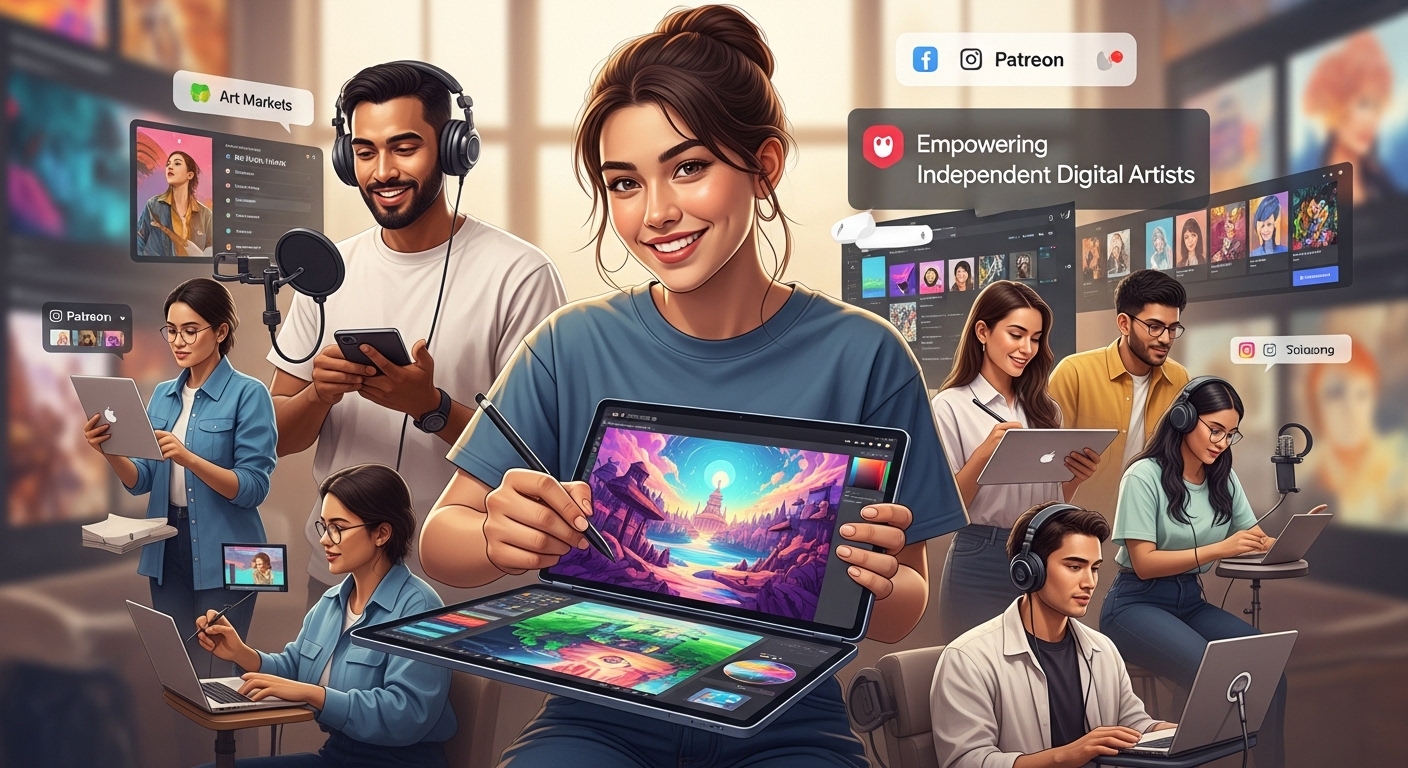
Creator platforms have transformed the global creative landscape by enabling individuals to share, distribute, and monetize their work without relying on traditional media gatekeepers. In the past, artists, musicians, writers, and filmmakers often depended on publishers, galleries, or production companies to reach audiences. Today, content platforms provide direct access to global viewers and consumers, empowering digital creators to build independent careers. This shift has accelerated the growth of the creative economy, where creativity itself becomes a primary economic driver supported by technology.
The rise of creator platforms coincides with broader digital transformation trends such as social media expansion, streaming technology, and mobile connectivity. Independent artists can now publish content instantly, engage audiences in real time, and earn income through diverse online monetization channels. As a result, creative careers are becoming more accessible and scalable than ever before. This democratization of creativity is reshaping how artistic value is created, distributed, and rewarded.
Evolution of Creator Platforms and Content Distribution
The development of creator platforms has progressed through several stages, from early blogging and video-sharing sites to sophisticated ecosystems that support entire creator businesses. Modern content platforms offer integrated tools for publishing, analytics, community engagement, and revenue generation. This infrastructure enables digital creators to operate as independent media brands rather than relying on intermediaries.
The table below outlines the evolution of creator platforms and their capabilities.
| Platform Stage | Key Features | Impact on Digital Creators |
|---|---|---|
| Early Platforms | Basic publishing and sharing | Initial global reach |
| Social Platforms | Audience interaction and virality | Community building |
| Monetization Platforms | Ads, subscriptions, tipping | Direct income generation |
| Creator Ecosystems | Analytics, branding, commerce tools | Full creator businesses |
This progression demonstrates how content platforms evolved from simple distribution channels into comprehensive economic systems supporting the creative economy.
Online Monetization and Financial Independence for Creators
One of the most significant ways creator platforms empower digital artists is through diversified online monetization opportunities. Traditional creative industries often provided limited income channels controlled by intermediaries. Creator platforms, however, allow artists to earn revenue directly from audiences through subscriptions, memberships, digital product sales, live events, and brand partnerships.
Subscription-based models enable creators to generate predictable recurring income from loyal followers. Digital creators can also sell exclusive content, courses, or merchandise without needing physical distribution networks. Tipping and micro-payment systems allow audiences to support artists voluntarily, strengthening the relationship between creators and fans.
Brand collaborations represent another important revenue stream. Content platforms connect creators with companies seeking authentic marketing partnerships. Independent artists can monetize their influence while maintaining creative control. This shift toward direct online monetization has reduced dependence on traditional media institutions and expanded financial opportunities within the creative economy.
Building Personal Brands and Audience Communities
Creator platforms do more than provide income; they enable digital creators to build recognizable personal brands and engaged communities. Unlike traditional media distribution, where audiences interact primarily with content, content platforms encourage direct creator–audience relationships. Through comments, live streams, and community posts, creators receive immediate feedback and foster loyalty.
Personal branding is central to long-term success in the creator economy. Independent digital artists can define their identity, style, and messaging without external constraints. Consistent interaction and storytelling help creators differentiate themselves in competitive digital environments. Strong personal brands attract partnerships, sponsorships, and cross-platform opportunities.
Community-driven content also improves creative sustainability. Audience insights and analytics tools allow creators to understand preferences and trends, enabling more targeted content strategies. This feedback loop between creators and audiences is a defining feature of modern content platforms and a major driver of their empowering effect.
Role of Technology in Expanding Creative Opportunities
Technological innovation continues to expand what digital creators can produce and monetize. High-quality content production tools are now accessible through smartphones, affordable cameras, and editing software. Cloud-based platforms simplify distribution and collaboration, enabling creators to reach global audiences instantly.
Artificial intelligence and automation tools are also transforming creative workflows. AI-assisted editing, design generation, and content recommendations help creators produce material more efficiently. Virtual and augmented reality technologies are opening new artistic formats such as immersive experiences and interactive storytelling. These innovations broaden the scope of the creative economy and allow independent artists to experiment with new forms of expression.
Content platforms are increasingly integrating e-commerce capabilities, allowing creators to sell products directly within their digital environments. This convergence of media and commerce strengthens online monetization and supports sustainable creator businesses. As technology evolves, creator platforms will continue lowering barriers to entry while expanding creative potential.
Challenges and Future Outlook of Creator Platforms
Despite their benefits, creator platforms also present challenges for digital creators. Income volatility, algorithm dependency, and intense competition can make sustainability difficult. Platform policies and revenue models may change, affecting creator earnings and visibility. Additionally, content saturation requires creators to invest significant time in marketing and audience engagement.
However, the future outlook for creator platforms remains strong. Diversification across multiple content platforms reduces dependency on any single system. Decentralized and blockchain-based platforms are emerging, offering new ownership and monetization models. Governments and industry organizations are also recognizing the economic importance of digital creators and developing policies to support the creative economy.
Education and skill development will be critical for long-term success in this evolving landscape. Digital creators increasingly need expertise in branding, marketing, analytics, and business management in addition to artistic talent. As creator platforms mature, they are likely to provide more professional tools and support structures for independent artists.
Final Thought
Creator platforms are empowering independent digital artists by providing direct access to audiences, diverse online monetization channels, and tools for building sustainable creative businesses. Through technological innovation and the growth of the creative economy, digital creators can achieve independence and global reach without traditional intermediaries. As content platforms continue to evolve, they will further reshape how creativity is produced, shared, and valued in the modern digital world.