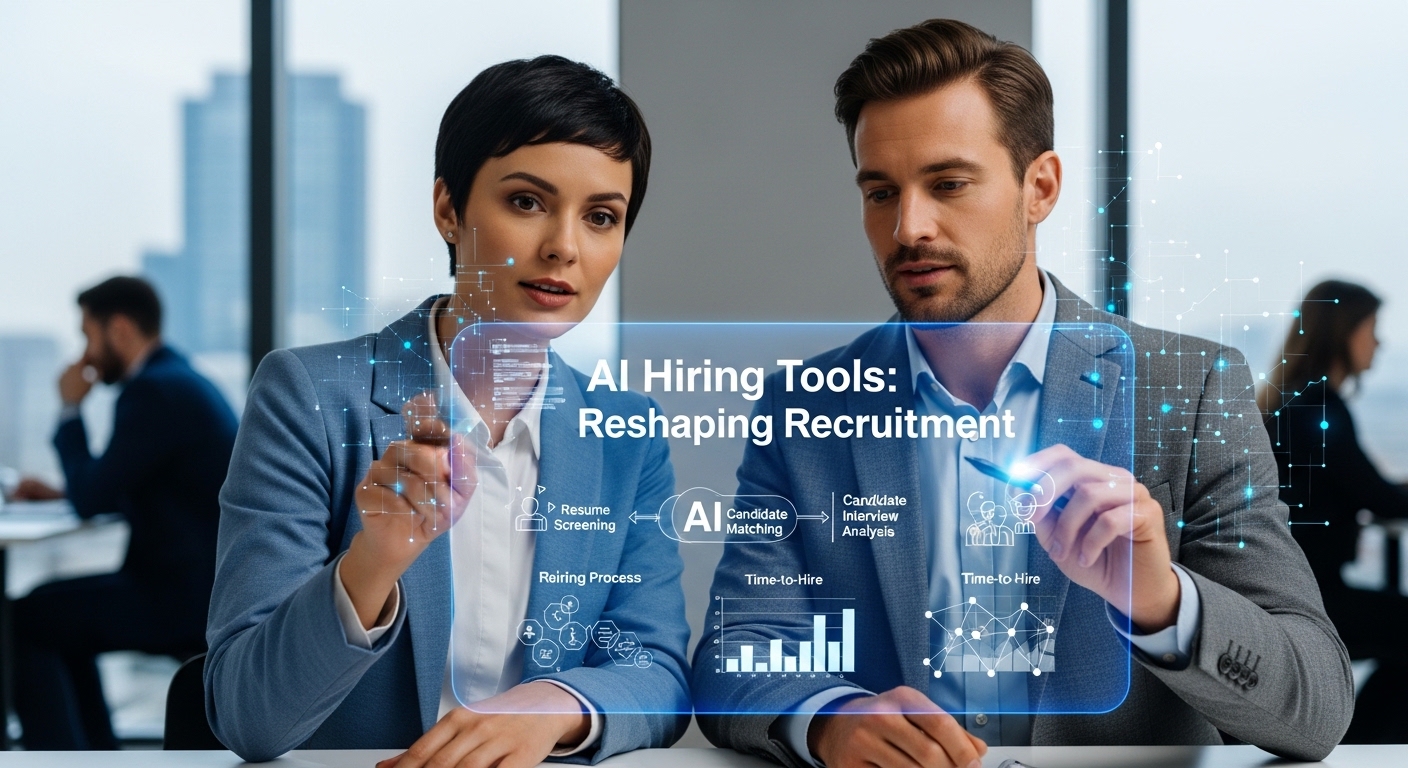
AI hiring tools are transforming how organizations approach recruitment by introducing smarter, faster, and more efficient methods for identifying talent. As hiring trends evolve, companies are increasingly turning to HR technology to streamline recruitment workflows and improve decision-making. Recruitment automation powered by artificial intelligence allows businesses to manage large applicant pools, analyze candidate data, and identify suitable matches more effectively. This shift reflects a broader movement toward data-driven talent acquisition strategies that aim to enhance both employer efficiency and candidate experience.
Understanding AI Hiring Tools and Recruitment Automation
AI hiring tools use advanced algorithms to assist with tasks such as resume screening, candidate matching, and interview scheduling. Recruitment automation enables HR teams to handle repetitive administrative processes, freeing up time for strategic activities such as candidate engagement and employer branding. Instead of manually reviewing hundreds of applications, recruiters can rely on AI systems to analyze skills, experience, and qualifications in a structured way.
HR technology platforms often integrate AI hiring tools into broader recruitment ecosystems that include applicant tracking systems and communication tools. These systems help ensure consistency throughout the hiring process, reducing delays and improving overall efficiency. As hiring trends continue to shift toward digital solutions, recruitment automation is becoming an essential component of modern talent acquisition strategies.
Role of HR Technology in Modern Talent Acquisition
HR technology plays a central role in shaping how organizations attract and evaluate candidates. AI hiring tools provide insights into candidate behavior and performance patterns, enabling recruiters to make more informed decisions. Talent acquisition teams can use predictive analytics to identify potential candidates who align with organizational goals and workplace culture.
The integration of AI into HR technology also supports diversity initiatives by focusing on skills-based evaluation rather than subjective judgments. While human oversight remains essential, AI systems can help minimize biases by standardizing certain aspects of the hiring process. This balance between technology and human expertise reflects evolving hiring trends that emphasize fairness and efficiency.
Impact on Hiring Trends and Candidate Experience
AI hiring tools are influencing hiring trends by creating more streamlined and personalized recruitment experiences. Candidates benefit from faster responses, automated updates, and more transparent communication throughout the application process. Recruitment automation helps reduce waiting times, allowing candidates to move through hiring stages more quickly.
From an organizational perspective, AI hiring tools improve talent acquisition by identifying patterns that may not be immediately visible to human recruiters. For example, AI systems can analyze successful employee profiles to determine which qualities contribute to long-term performance. This data-driven approach allows companies to refine hiring strategies and improve overall workforce quality.
Comparison of Traditional Recruitment vs AI Hiring Tools
| Aspect | Traditional Recruitment | AI Hiring Tools |
|---|---|---|
| Resume Screening | Manual review process | Recruitment automation with data analysis |
| Hiring Speed | Time-consuming workflows | Faster talent acquisition cycles |
| Candidate Matching | Subjective evaluation | AI-driven skill matching |
| Communication | Limited updates | Automated HR technology interactions |
| Hiring Trends | Experience-based selection | Data-informed recruitment decisions |
Benefits for Recruiters and Organizations
AI hiring tools offer significant advantages for recruiters by reducing administrative burdens and improving workflow efficiency. Recruitment automation allows HR teams to focus on building relationships with candidates rather than managing repetitive tasks. Talent acquisition becomes more strategic, as AI systems provide insights that help organizations identify long-term hiring needs.
Organizations also benefit from improved scalability. As companies grow, managing recruitment manually can become challenging. AI hiring tools enable businesses to handle larger volumes of applications without compromising quality. Additionally, HR technology platforms can track hiring metrics and provide analytics that support continuous improvement in recruitment strategies.
Challenges and Ethical Considerations
Despite their advantages, AI hiring tools raise important ethical considerations related to transparency, bias, and data privacy. While recruitment automation aims to reduce human bias, poorly designed algorithms may unintentionally reinforce existing patterns if not monitored carefully. Organizations must ensure that AI systems are regularly evaluated and updated to promote fairness.
Candidate privacy is another critical concern, as AI hiring tools rely on large datasets to function effectively. Clear communication about data usage and secure storage practices is essential for maintaining trust. Balancing technological innovation with ethical responsibility will remain a key focus as HR technology continues to evolve.
Future Outlook of AI Hiring Tools and Recruitment Processes
The future of AI hiring tools is closely linked to advancements in HR technology and evolving hiring trends. Emerging features such as conversational AI interviews, real-time skill assessments, and predictive workforce planning are expected to further enhance recruitment automation. As organizations prioritize efficiency and inclusivity, AI-driven talent acquisition strategies will likely become standard practice.
Companies may also explore hybrid approaches that combine human intuition with AI insights, ensuring that recruitment decisions remain both data-informed and empathetic. As the workplace continues to evolve, AI hiring tools will play a crucial role in helping organizations adapt to changing talent demands and workforce expectations.
Final Thought
AI hiring tools are reshaping recruitment processes by combining recruitment automation, advanced HR technology, and data-driven talent acquisition strategies. By improving efficiency, enhancing candidate experiences, and supporting evolving hiring trends, these tools are transforming how organizations build their teams. As technology continues to advance, AI hiring tools will remain a powerful force in creating smarter, more inclusive, and more effective recruitment practices.