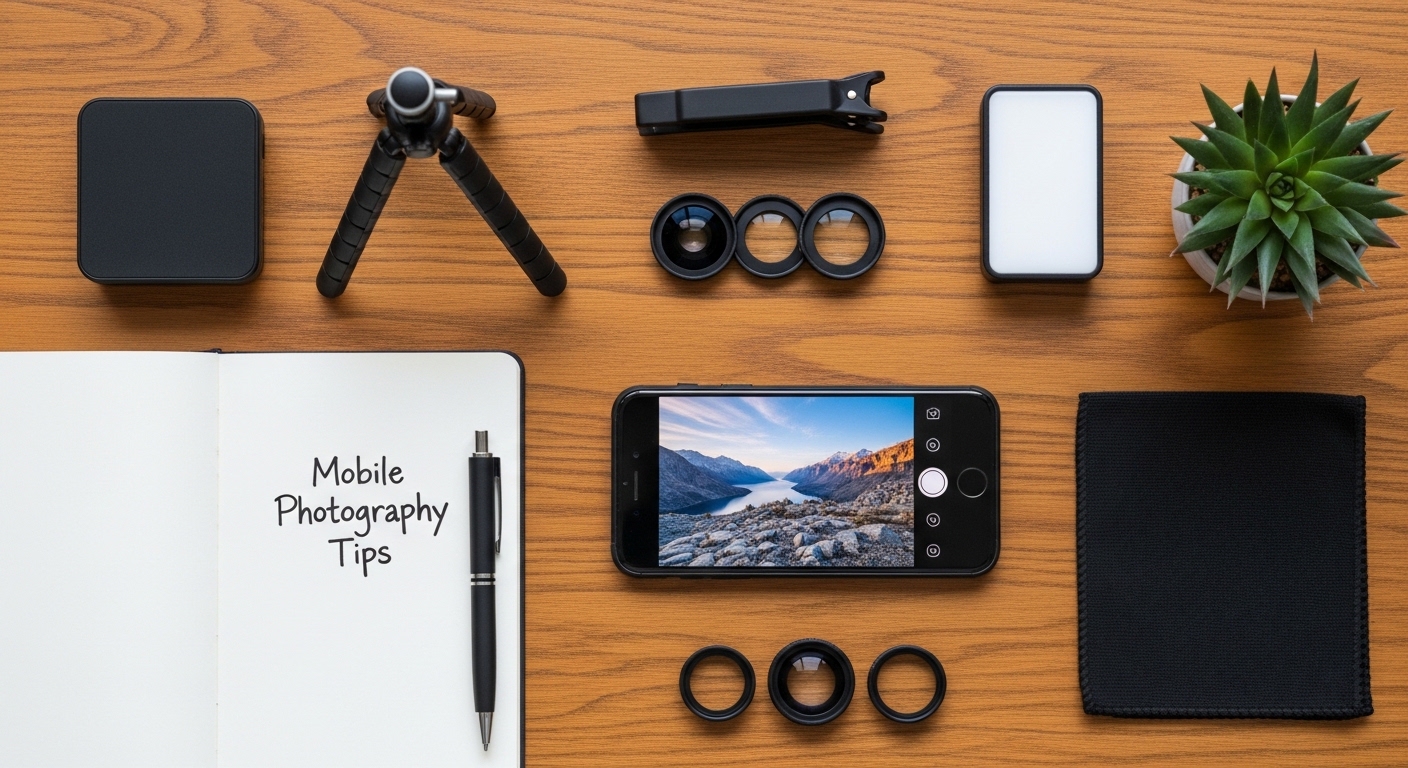
Mobile photography has become one of the most popular forms of visual expression due to the widespread availability of smartphones with advanced camera technology. Modern smartphones include high-resolution sensors, multiple lenses, and computational photography features that enable users to capture impressive images without professional equipment. However, while technology has made photography more accessible, strong pictures still depend on understanding photography basics and applying effective camera skills. Mobile photography tips help users transform everyday snapshots into visually compelling images.
The convenience of smartphone photography allows people to document daily life, travel experiences, products, and creative scenes instantly. Social media platforms and digital sharing culture have further increased interest in improving photo quality. As a result, learning practical photo tips has become valuable not only for hobbyists but also for content creators, entrepreneurs, and professionals. By mastering composition, lighting, and camera settings, anyone can significantly enhance smartphone photography results.
Understanding Smartphone Camera Capabilities
Before applying mobile photography tips, it is important to understand how smartphone cameras function. Unlike traditional cameras, smartphones rely heavily on software processing alongside hardware components. Features such as HDR, portrait mode, night mode, and AI scene detection automatically adjust exposure, contrast, and color. Knowing when and how to use these features improves image quality and creative control.
Most smartphones include multiple lenses such as wide, ultra-wide, and telephoto. Each lens serves different photographic purposes. Wide lenses capture natural perspectives, ultra-wide lenses expand field of view for landscapes or architecture, and telephoto lenses allow closer framing without digital zoom loss. Understanding these options helps photographers choose the best perspective for each scene.
The table below summarizes common smartphone camera modes and their ideal uses.
| Camera Mode | Function | Best Use Scenario |
|---|---|---|
| HDR | Balances highlights and shadows | High contrast scenes |
| Portrait | Background blur effect | People and close subjects |
| Night Mode | Enhances low-light detail | Evening or indoor shots |
| Ultra-wide | Expands field of view | Landscapes and architecture |
| Telephoto | Optical zoom | Distant subjects |
Familiarity with these tools is a key step in improving smartphone photography outcomes.
Composition Techniques for Better Mobile Photos
Composition is one of the most important photography basics influencing image impact. Even with advanced camera technology, poor composition can result in unbalanced or cluttered photos. Mobile photography tips often emphasize simple compositional principles that significantly improve visual appeal. The rule of thirds is a fundamental technique where subjects are placed along grid lines rather than centered, creating more dynamic images.
Leading lines guide the viewer’s eye toward the main subject using natural or architectural lines such as roads, railings, or shadows. Framing techniques use surrounding elements like windows or foliage to highlight subjects. Symmetry and patterns create visually pleasing repetition, while negative space emphasizes simplicity and focus. These composition methods enhance storytelling and clarity in smartphone photography.
Perspective also plays a major role in composition. Changing shooting angles by crouching, tilting, or moving closer can transform ordinary scenes into compelling visuals. Mobile devices make perspective experimentation easy due to their portability. Developing composition awareness is essential for strengthening camera skills and producing professional-looking images.
Importance of Lighting in Smartphone Photography
Lighting is a critical factor in photography quality, often more influential than camera specifications. Natural light generally produces the most flattering and detailed images. Mobile photography tips frequently recommend shooting during soft light conditions such as early morning or late afternoon, when sunlight is diffused and shadows are gentle. Harsh midday light can create strong contrasts and unwanted shadows.
Indoor photography benefits from positioning subjects near windows or light sources to enhance brightness and color accuracy. Backlighting can create silhouettes or glowing edges, while side lighting adds depth and texture. Understanding how light direction and intensity affect images helps photographers control mood and detail.
Low-light photography requires careful technique. Night mode stabilizes exposure but still benefits from steady hands or support to prevent blur. Avoiding digital zoom in low light preserves clarity. Artificial lighting such as lamps or small LED lights can supplement illumination. Mastering lighting awareness greatly improves smartphone photography results and visual storytelling.
Editing and Enhancing Mobile Photos
Editing is an integral part of modern smartphone photography, enabling refinement of color, exposure, and composition after capture. Built-in editing tools and mobile apps allow adjustments to brightness, contrast, saturation, sharpness, and cropping. Effective editing enhances photos without making them appear unnatural. Subtle corrections often produce the most professional results.
Cropping improves composition by removing distractions or aligning subjects according to photography basics like the rule of thirds. Exposure adjustments recover detail in shadows or highlights. Color temperature corrections balance warmth or coolness for realistic tones. Sharpening enhances detail but should be applied moderately to avoid noise.
Filters can create stylistic consistency across images, which is useful for social media or brand identity. However, overuse can reduce authenticity. Learning balanced editing techniques strengthens camera skills and ensures that smartphone photography maintains both quality and realism. Editing completes the creative process and refines visual impact.
Developing Camera Skills Through Practice
Consistent practice is essential for mastering mobile photography tips and improving picture quality. Observing everyday scenes with a photographic mindset helps identify interesting light, patterns, and compositions. Experimenting with different angles, modes, and lighting conditions builds familiarity with smartphone camera capabilities. Over time, users develop intuitive camera skills that enhance speed and creativity.
Studying professional photography and analyzing composition or lighting techniques can also improve skills. Recreating similar shots using a smartphone helps translate theoretical knowledge into practical ability. Feedback from peers or online communities encourages growth and inspiration.
Mobile photography is particularly suited to learning because smartphones are always accessible. Capturing moments frequently builds experience and confidence. As photography basics become habitual, users begin to see visual opportunities in ordinary environments. Continuous experimentation and reflection lead to noticeable improvement in picture quality and artistic expression.
Final Thought
Mobile photography tips can significantly improve your pictures by combining smartphone technology with strong photography basics and camera skills. Through understanding camera modes, applying composition techniques, mastering lighting, and refining images with editing, anyone can create visually compelling photos using a smartphone. With regular practice and creative exploration, mobile photography becomes a powerful and accessible way to capture and share meaningful visual stories.