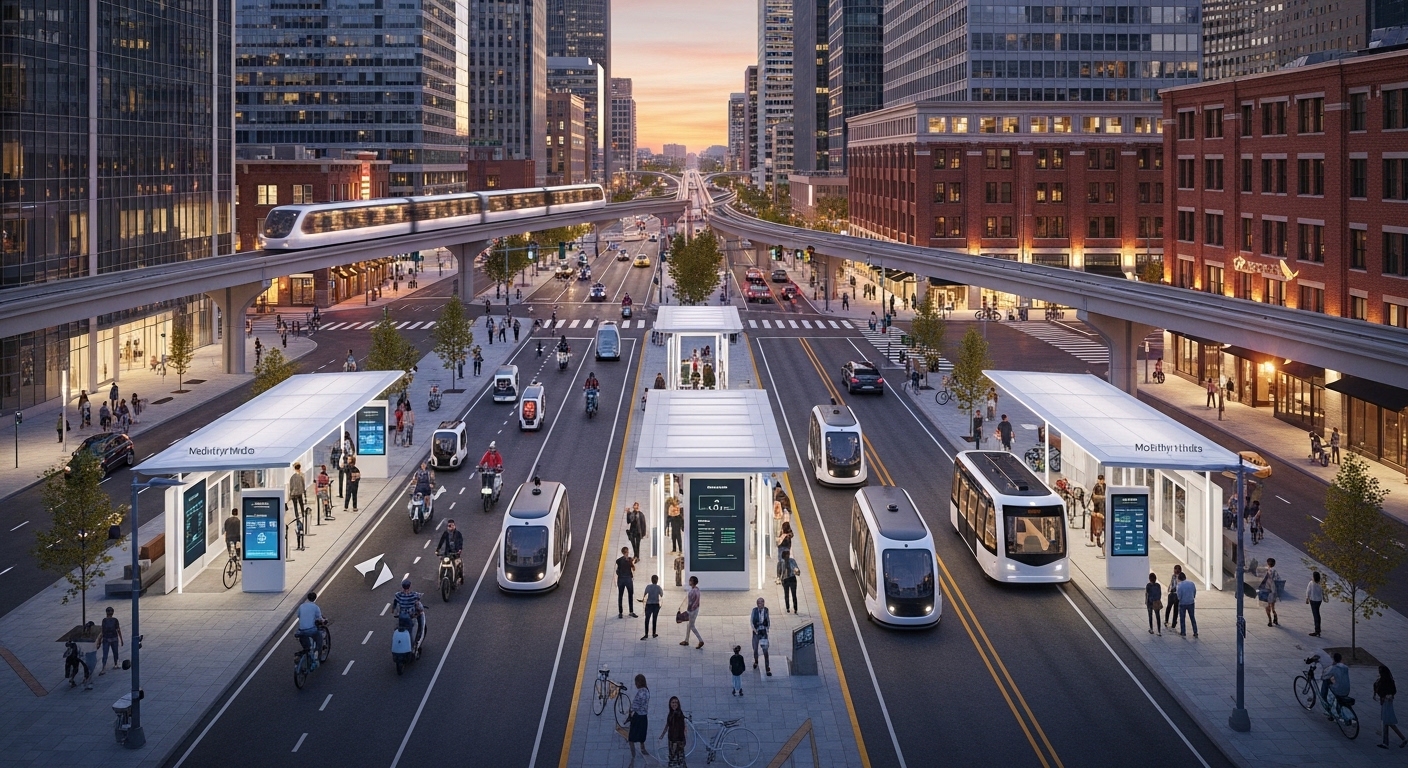
Shared mobility is reshaping how people move within cities by replacing traditional vehicle ownership with flexible, on-demand transportation access. Instead of relying solely on private cars or fixed public transport routes, urban residents increasingly use shared transportation services such as ride-hailing, car-sharing, bike-sharing, and scooter-sharing. This shift reflects broader ride sharing trends and changing attitudes toward urban transport efficiency, cost, and sustainability. As cities grow denser and traffic congestion intensifies, shared mobility has emerged as a central component of mobility innovation and smart city planning.
Urbanization has created transportation challenges including congestion, pollution, parking shortages, and infrastructure strain. Traditional car-centric transport models struggle to meet the mobility needs of expanding urban populations. Shared mobility addresses these issues by optimizing vehicle utilization and reducing the number of privately owned cars on roads. By enabling multiple users to access the same vehicle at different times, shared transport systems increase efficiency while lowering environmental impact. This transformation is redefining the future of urban transportation systems worldwide.
Types of Shared Mobility Services in Modern Cities
Shared mobility encompasses multiple service models that collectively reshape urban transport ecosystems. Ride-hailing platforms connect passengers with drivers through mobile applications, providing door-to-door transportation without vehicle ownership. Car-sharing services allow short-term rental of vehicles for self-driving trips, while bike-sharing and scooter-sharing systems offer micro-mobility options for short-distance travel. Each model addresses different travel needs and distances within cities.
The table below summarizes major shared mobility modes and their urban transport roles.
| Shared Mobility Mode | Typical Use Distance | Access Method | Urban Benefit |
|---|---|---|---|
| Ride-hailing | Medium to long | App-based driver service | Convenience and flexibility |
| Car-sharing | Medium | Short-term vehicle rental | Reduced ownership |
| Bike-sharing | Short | Docked/dockless bikes | Low-emission travel |
| Scooter-sharing | Very short | Electric scooters | Last-mile connectivity |
These complementary services form integrated shared mobility networks that support efficient movement across urban environments.
Impact on Urban Transport Efficiency and Congestion
One of the most significant benefits of shared mobility is improved urban transport efficiency. Private vehicles often remain parked for most of the day, occupying valuable urban space while contributing little to mobility. Shared vehicles, in contrast, are used by multiple individuals throughout the day, maximizing utilization and reducing idle capacity. This efficiency can decrease the overall number of vehicles needed in cities.
Ride sharing trends show that shared trips can reduce traffic congestion by consolidating multiple passengers into fewer vehicles. Car-sharing programs also encourage households to reduce or eliminate private car ownership, lowering vehicle density on roads. Micro-mobility options such as bike and scooter sharing reduce reliance on cars for short trips, which constitute a large proportion of urban journeys.
Reduced congestion has additional benefits including shorter travel times, improved air quality, and enhanced urban livability. Cities adopting shared mobility solutions often redesign streets to prioritize multi-modal transport, integrating shared services with public transit systems. This coordinated approach improves overall urban transport performance and accessibility.
Role of Shared Mobility in Smart City Development
Shared mobility is closely aligned with smart cities initiatives that leverage technology and data to optimize urban infrastructure and services. Smart mobility systems use digital platforms, sensors, and analytics to manage transportation demand and supply in real time. Shared mobility services generate valuable data on travel patterns, peak demand, and route efficiency, enabling better urban planning decisions.
Integration with public transport is a key aspect of smart city mobility innovation. Shared mobility solutions often serve as first-mile and last-mile connections to transit hubs, extending the reach of buses, trains, and metro systems. This integration encourages multimodal travel and reduces dependence on private vehicles. Mobility-as-a-service platforms are emerging to combine shared mobility and public transport into unified digital booking and payment systems.
Environmental sustainability is another major smart city objective supported by shared mobility. Electric shared vehicles, bikes, and scooters reduce greenhouse gas emissions and urban pollution. By encouraging shared use rather than ownership, cities can reduce resource consumption and infrastructure demands. These contributions make shared mobility a foundational element of sustainable smart city transport strategies.
Economic and Social Implications of Ride Sharing Trends
Ride sharing trends have also created new economic opportunities and social impacts within urban transport systems. Shared mobility platforms generate flexible employment for drivers, fleet managers, and service operators. Entrepreneurs can participate in mobility ecosystems through vehicle leasing, maintenance, and service provision. This expansion of mobility innovation contributes to urban economic activity.
Affordability is another important factor. Shared mobility services often provide cost-effective alternatives to car ownership, especially in densely populated cities where parking and maintenance costs are high. Individuals can access transportation when needed without bearing full ownership expenses. This accessibility supports mobility inclusion for populations that may not own vehicles.
Social connectivity is also enhanced by shared transport systems. Ride-sharing and shared micro-mobility increase mobility options for individuals without access to private transport, including students, elderly populations, and low-income residents. Improved mobility access supports employment opportunities, education, and social participation. These broader social benefits reinforce the transformative role of shared mobility in urban life.
Future Outlook of Shared Mobility and Urban Transportation
The future of shared mobility is closely tied to ongoing mobility innovation and urbanization trends. Autonomous vehicle technology is expected to significantly expand shared mobility capabilities by enabling driverless ride-hailing and shared fleets. Autonomous shared vehicles could operate continuously, further increasing utilization and reducing costs.
Electrification will also shape shared mobility evolution. Electric shared fleets reduce emissions and operating costs, supporting sustainable urban transport goals. Integration with renewable energy infrastructure and smart charging systems will enhance environmental benefits. Cities are likely to promote shared electric mobility through incentives and infrastructure investment.
Data-driven urban planning will continue to integrate shared mobility into transportation ecosystems. Predictive analytics and AI-based demand modeling will optimize fleet distribution and route planning. Mobility-as-a-service platforms will unify multiple transport modes into seamless user experiences. As cities grow and mobility needs evolve, shared mobility solutions will remain central to transforming urban transportation systems.
Final Thought
Shared mobility is transforming urban transportation by replacing ownership-based travel with flexible, efficient, and technology-driven mobility access. Through evolving ride sharing trends, mobility innovation, and smart city integration, shared mobility solutions are reducing congestion, improving accessibility, and supporting sustainable urban transport systems. As technology advances and cities adapt, shared mobility will play an increasingly vital role in shaping the future of urban transportation worldwide.