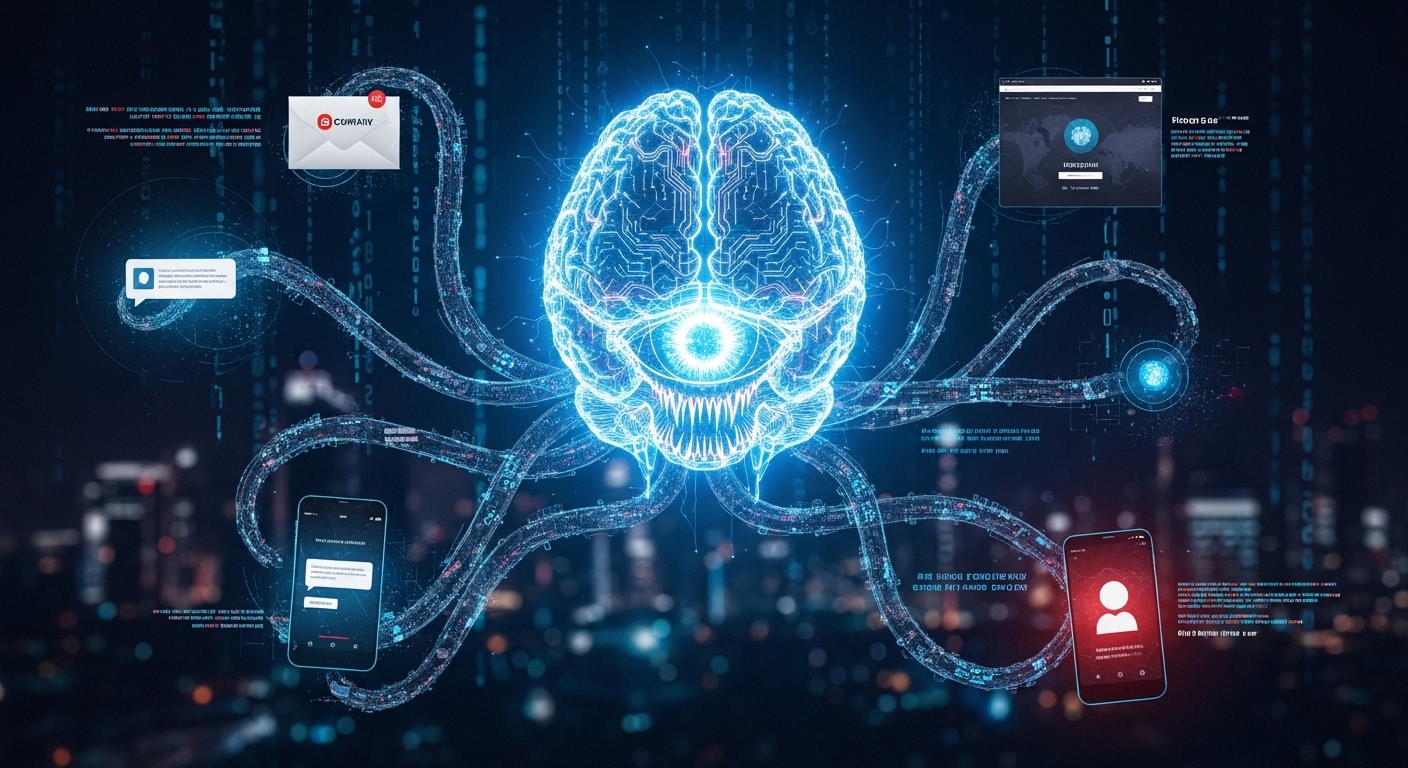
AI phishing attacks are rapidly evolving, presenting new challenges for individuals and organizations trying to protect themselves from cyber scams. Traditional phishing attempts often relied on poorly written emails or obvious scams, but artificial intelligence has enabled attackers to create more convincing and targeted messages. These sophisticated cybersecurity threats combine advanced language generation, automation, and social engineering tactics to trick users into sharing sensitive information. As digital communication continues to expand, understanding how AI phishing attacks operate is becoming essential for maintaining strong email security and online safety.
Understanding AI Phishing Attacks and Cyber Scams
AI phishing attacks use machine learning tools to generate realistic messages that mimic legitimate communication. Attackers can analyze publicly available data, social media profiles, or previous interactions to craft personalized emails that appear authentic. Unlike traditional cyber scams that relied on generic messaging, AI-powered phishing campaigns adapt to individual targets, increasing the likelihood of success.
Social engineering plays a significant role in these attacks by exploiting human psychology rather than technical vulnerabilities. Attackers may impersonate trusted contacts, create urgent scenarios, or mimic official organizations to encourage quick responses. By combining AI-generated content with psychological manipulation, cybercriminals can bypass basic email security filters and deceive even experienced users.
Role of Social Engineering in Modern Cybersecurity Threats
Social engineering techniques have become more advanced with the integration of AI technologies. Attackers can now replicate writing styles, analyze communication patterns, and generate highly convincing messages that resemble real conversations. This makes cybersecurity threats more difficult to detect, as phishing emails may no longer contain obvious warning signs.
AI phishing attacks also extend beyond email, targeting messaging platforms, social media accounts, and voice-based communication channels. By leveraging automation, attackers can launch large-scale campaigns that reach thousands of potential victims simultaneously. This evolution highlights the need for increased awareness and proactive cybersecurity measures to protect against emerging threats.
Impact on Email Security and Organizational Risk
The rise of AI phishing attacks has significant implications for email security strategies. Organizations must adapt to evolving threats by implementing advanced detection tools and training employees to recognize suspicious communication. Traditional security measures that rely solely on keyword detection may not be sufficient to identify AI-generated phishing messages.
For businesses, cybersecurity threats can lead to financial loss, data breaches, and reputational damage. Strengthening email security involves a combination of technological solutions and human awareness. Employees who understand how social engineering tactics work are better equipped to identify suspicious requests and avoid falling victim to cyber scams. As AI phishing attacks become more sophisticated, organizations must prioritize ongoing education and security updates.
Comparison of Traditional Phishing vs AI Phishing Attacks
| Aspect | Traditional Phishing | AI Phishing Attacks |
|---|---|---|
| Message Quality | Generic and poorly written | Highly realistic AI-generated content |
| Targeting | Broad audience | Personalized cyber scams |
| Social Engineering | Basic manipulation tactics | Advanced psychological strategies |
| Email Security Detection | Easier to filter | Harder to detect due to sophistication |
| Cybersecurity Threat Level | Moderate risk | Increased cybersecurity threats |
Strategies for Protecting Against AI Phishing Attacks
Protecting against AI phishing attacks requires a multi-layered approach that combines technology and awareness. Individuals should verify the authenticity of unexpected emails, especially those requesting sensitive information or urgent action. Avoiding suspicious links and attachments is an essential step in maintaining strong email security.
Organizations can enhance cybersecurity defenses by implementing advanced authentication methods, encryption protocols, and AI-based threat detection systems. Regular training programs help employees recognize social engineering tactics and respond appropriately to potential threats. By fostering a culture of cybersecurity awareness, businesses and individuals can reduce the risk of falling victim to increasingly sophisticated cyber scams.
Challenges and Ethical Considerations
The rise of AI phishing attacks raises important ethical and technological challenges. As artificial intelligence becomes more accessible, malicious actors may continue to develop new methods for exploiting digital communication channels. Balancing innovation with security is essential for ensuring that AI technologies are used responsibly.
Privacy concerns also play a role, as attackers often rely on publicly available information to create convincing phishing messages. Users must remain mindful of the data they share online and adjust privacy settings to limit exposure. Collaboration between technology companies, cybersecurity experts, and policymakers will be critical in addressing the evolving landscape of cybersecurity threats.
Future Outlook of AI Phishing Attacks and Cybersecurity
The future of AI phishing attacks is closely tied to advancements in artificial intelligence and digital communication platforms. As AI tools become more sophisticated, cybersecurity strategies must evolve to keep pace with emerging risks. Innovations such as behavioral analysis, real-time threat monitoring, and adaptive email security systems are expected to play a significant role in combating advanced cyber scams.
Cybersecurity professionals are increasingly focusing on proactive defense measures that anticipate potential threats rather than reacting after an attack occurs. Education and awareness will remain key components of effective cybersecurity strategies, empowering users to identify and avoid social engineering tactics. As technology continues to evolve, staying informed about AI phishing attacks will be essential for maintaining digital safety.
Final Thought
AI phishing attacks are becoming more sophisticated by combining advanced social engineering techniques with realistic AI-generated communication. These evolving cybersecurity threats highlight the importance of strong email security practices and ongoing awareness of cyber scams. By understanding how attackers operate and adopting proactive defense strategies, individuals and organizations can protect themselves from the growing risks associated with AI-driven phishing campaigns.