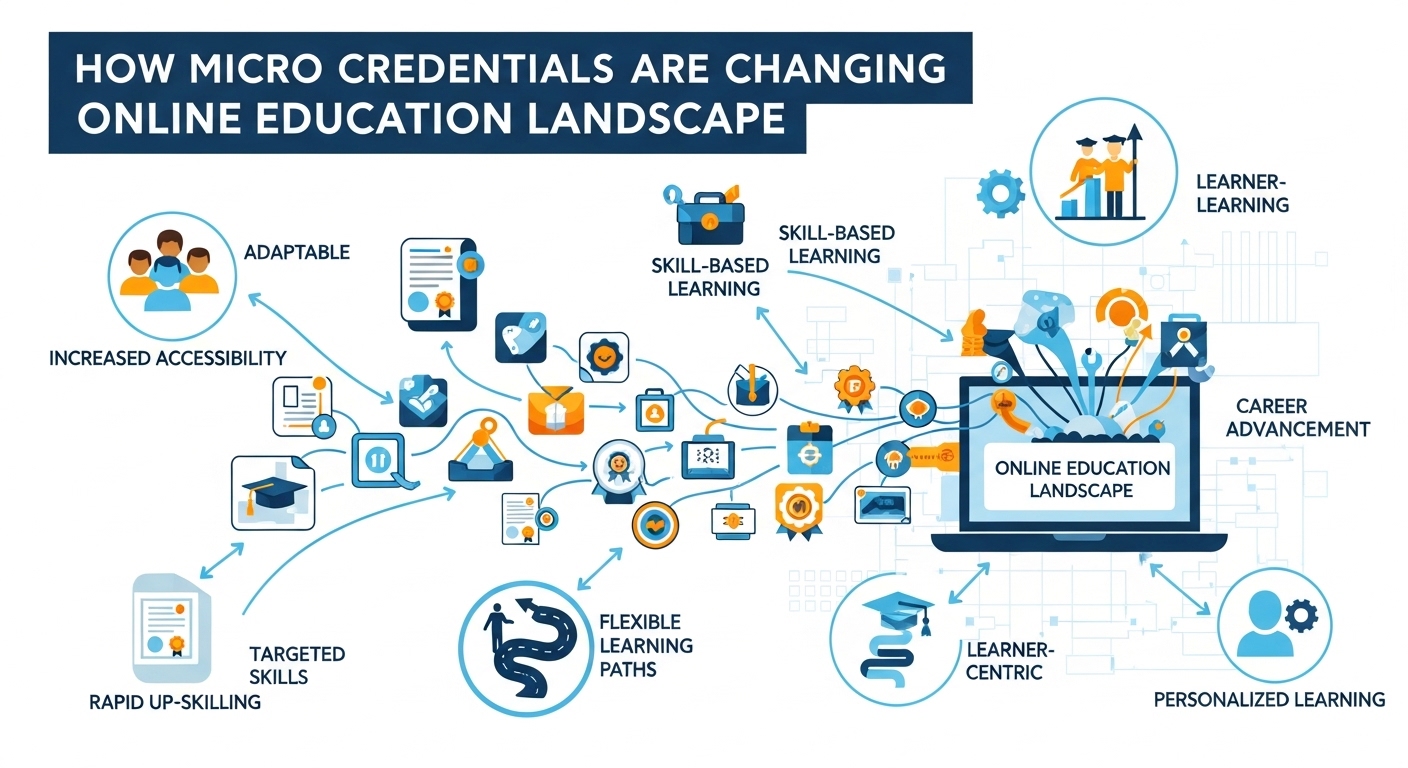
Micro credentials are reshaping the way people approach education and career development in the digital era. Traditional degree programs are no longer the only pathway to gaining professional skills, as learners increasingly turn to online certificates and short-term courses to build specific competencies. This shift reflects broader education trends that prioritize flexibility, accessibility, and real-world application. Micro credentials allow individuals to focus on skill based learning, making education more adaptable to evolving job market demands and the growing need for continuous upskilling.
Understanding Micro Credentials and Online Certificates
Micro credentials are compact educational programs designed to teach targeted skills or knowledge areas within a shorter timeframe compared to traditional academic degrees. Often delivered through online platforms, these programs provide learners with online certificates that demonstrate competency in specific subjects. Unlike lengthy courses that cover broad topics, micro credentials focus on practical, job-ready skills, enabling learners to apply new knowledge quickly.
The rise of digital learning platforms has made micro credentials widely accessible to people from diverse backgrounds. Students, working professionals, and career changers can participate in skill based learning without relocating or committing to long-term academic schedules. This accessibility aligns with modern education trends that emphasize lifelong learning and personal growth beyond traditional classroom settings.
Role of Upskilling in Modern Education Trends
Upskilling has become a central theme in modern education trends, driven by rapid technological advancements and shifting industry requirements. Employers increasingly value candidates who demonstrate adaptability and continuous learning. Micro credentials support upskilling by offering flexible programs that allow learners to stay current with emerging tools and practices.
Skill based learning encourages individuals to build expertise incrementally rather than waiting years to complete a full degree. For example, professionals in technology, marketing, or healthcare can take micro credential courses to learn new software or methodologies relevant to their field. This approach helps bridge the gap between academic learning and practical workplace needs, making education more responsive to real-world challenges.
Impact on Career Development and Workforce Readiness
Micro credentials are influencing how individuals plan their careers by offering alternative pathways to professional growth. Instead of relying solely on traditional qualifications, learners can showcase online certificates that highlight specific competencies. This allows employers to assess skills more directly and match candidates with roles that require specialized knowledge.
For organizations, micro credentials provide opportunities to train employees efficiently without disrupting productivity. Companies can offer targeted training programs that align with strategic goals, supporting both individual development and overall workforce readiness. As industries evolve, the ability to quickly acquire new skills becomes essential, making micro credentials a valuable tool for both learners and employers.
Comparison of Traditional Degrees vs Micro Credentials
| Aspect | Traditional Degrees | Micro Credentials |
|---|---|---|
| Duration | Several years | Weeks or months |
| Focus | Broad academic knowledge | Skill based learning |
| Accessibility | Campus-based or long-term | Online certificates and flexible learning |
| Cost | Higher investment | More affordable options |
| Career Application | General qualification | Specific job-ready skills |
Benefits of Micro Credentials in Online Education
One of the key benefits of micro credentials is flexibility. Learners can choose programs that fit their schedules, making education more inclusive for individuals balancing work, family, or other responsibilities. Online certificates also provide immediate recognition of new skills, helping learners demonstrate progress without waiting for long academic cycles.
Micro credentials encourage personalized learning paths. Instead of following a fixed curriculum, learners can select courses that align with their interests and career goals. This adaptability supports education trends that prioritize individual growth and practical outcomes. Additionally, skill based learning promotes confidence and motivation by allowing learners to achieve milestones in shorter timeframes.
Challenges and Considerations
Despite their growing popularity, micro credentials present certain challenges. One concern is the lack of standardized recognition across industries, as not all employers interpret online certificates in the same way. Learners must carefully evaluate course quality and credibility to ensure that their efforts lead to meaningful career opportunities.
Another consideration is balancing micro credentials with foundational education. While short courses are effective for upskilling, they may not replace the comprehensive knowledge gained through traditional degree programs. Combining both approaches can create a well-rounded educational experience that supports long-term career success.
Future Outlook of Micro Credentials and Online Education
The future of micro credentials looks promising as education trends continue to evolve toward digital and flexible learning models. Universities and training providers are increasingly incorporating micro credential programs into their offerings, recognizing the demand for shorter, skill-focused courses. Partnerships between educational institutions and industry leaders may further enhance the value of online certificates by aligning curricula with real-world requirements.
Advancements in technology will likely improve the delivery of skill based learning through interactive platforms, personalized learning paths, and AI-driven recommendations. As the global workforce continues to adapt to rapid change, micro credentials are expected to play a significant role in shaping the future of education and professional development.
Final Thought
Micro credentials are changing the online education landscape by providing accessible, flexible, and skill-focused learning opportunities. Through online certificates, upskilling initiatives, and evolving education trends, learners can build relevant competencies that support career growth in a dynamic job market. As education continues to shift toward personalized and practical learning experiences, micro credentials will remain a powerful tool for individuals seeking to stay competitive and adaptable in the modern world.