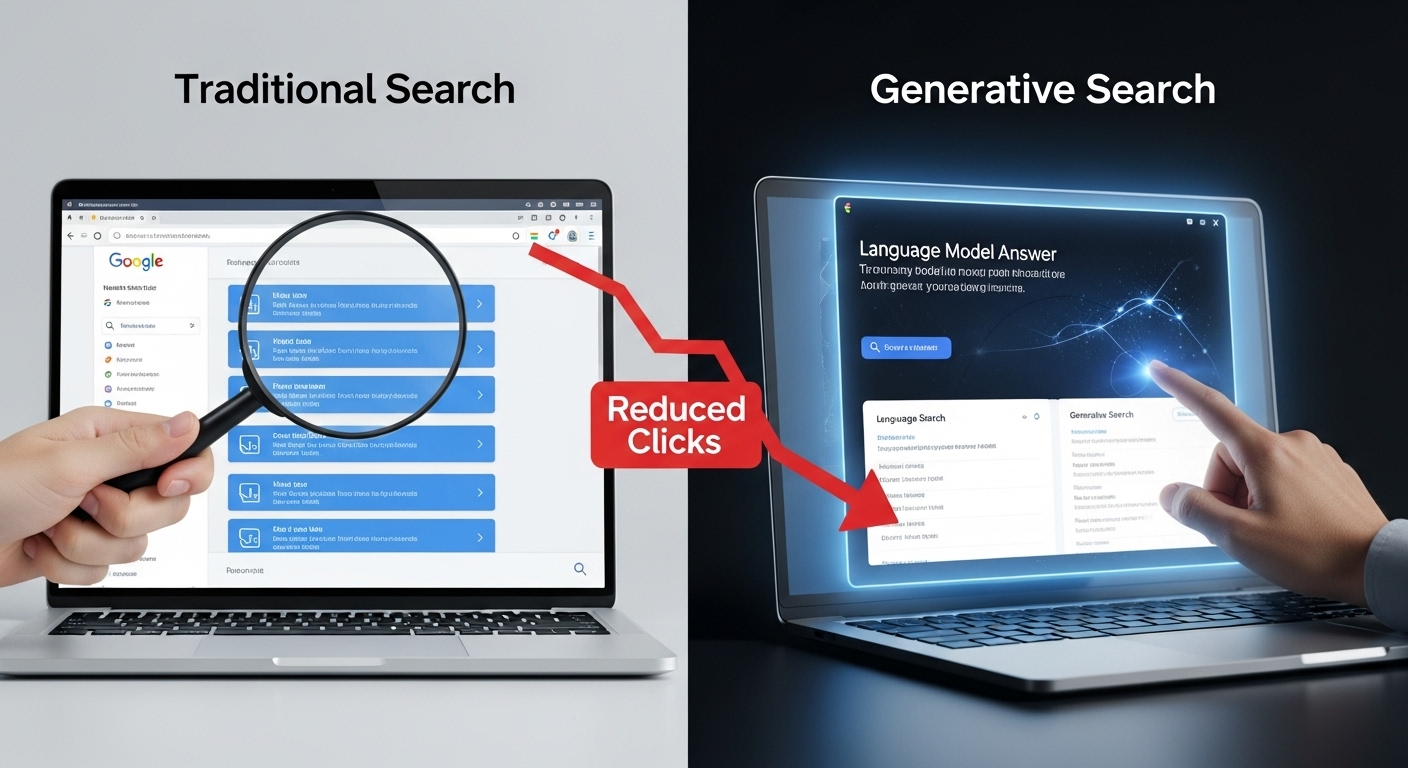
Generative search results are rapidly reshaping the way users interact with search engines and how websites receive organic traffic. Traditionally, search engines displayed a list of links that users clicked to find information. Today, AI-powered search systems analyze multiple sources and generate summarized answers directly on the results page. This shift is redefining AI SERP dynamics and changing long-standing SEO trends, forcing businesses to rethink how visibility and engagement are measured.
What Generative Search Results Really Mean
Generative search results use artificial intelligence models to understand user intent and deliver direct responses within the search interface. Instead of pointing users to individual pages, the system compiles information from several sources and presents it as a single, cohesive answer. This approach improves speed and convenience for users but reduces the need to click through to external websites. As a result, content creators may see their insights reflected in search results without receiving proportional traffic.
The Growing Influence of Zero Click Searches
Zero click searches have become a defining feature of modern search behavior. When users find answers immediately on the search page, they often leave without visiting any website. Generative search results accelerate this trend by offering comprehensive explanations, summaries, and follow-up suggestions directly within the AI SERP. While this benefits users, it challenges publishers who depend on organic clicks for revenue, subscriptions, or conversions. Informational websites, blogs, and comparison pages are among the most affected.
Changes in Search Behavior and User Intent
Search behavior is evolving from exploration to instant resolution. Users now expect search engines to act more like assistants than directories. Queries are becoming longer, more conversational, and intent-driven, which aligns well with generative search results. However, this also means users interact less with individual brands unless the content offers unique depth, firsthand experience, or exclusive insights that AI summaries cannot fully replace.
Impact on SEO Trends and Website Strategies
SEO trends are shifting away from pure keyword targeting toward authority, originality, and trust signals. Websites must focus on content that demonstrates expertise and offers value beyond basic answers. Structured data, topical authority, and content freshness play a growing role in how generative search systems select sources. Rather than optimizing only for rankings, businesses now need to optimize for inclusion, credibility, and brand recognition within AI-generated responses.
Comparison of Traditional Search vs Generative Search Results
| Aspect | Traditional Search Results | Generative Search Results |
|---|---|---|
| Result Format | List of clickable links | AI-generated summarized answers |
| User Action | Click to explore websites | Often no click required |
| Traffic Flow | Higher website visits | Increased zero click searches |
| SEO Focus | Keywords and backlinks | Authority and content quality |
| Visibility | Page ranking matters most | Source credibility matters more |
How Businesses Can Adapt to Generative Search Results
To remain competitive, businesses must adapt their content strategy to align with generative search results. This includes producing in-depth guides, original research, case studies, and expert commentary that AI systems cannot easily replicate. Building brand authority across multiple platforms increases the likelihood of being cited within AI SERP summaries. Additionally, focusing on conversion optimization ensures that when users do click, the visit delivers meaningful value.
Final Thought
Generative search results are not eliminating the need for websites, but they are redefining how visibility and success are achieved. As zero click searches rise and search behavior continues to evolve, businesses that prioritize authority, originality, and user trust will remain relevant. Adapting early to these SEO trends will be the key to sustaining long-term organic growth in an AI-driven search landscape.