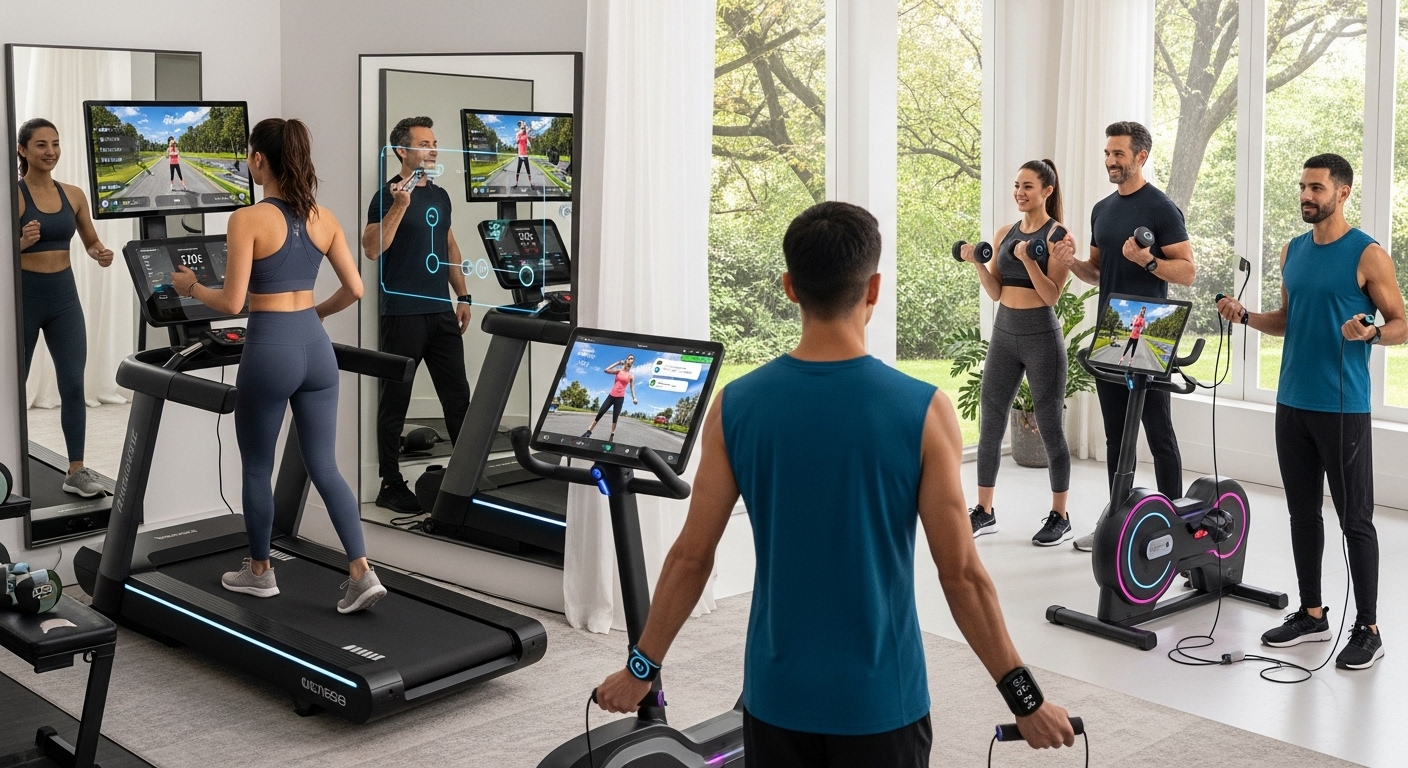
Smart fitness equipment has become increasingly popular as more people choose to exercise at home rather than relying solely on traditional gyms. Changes in lifestyle, busy schedules, and greater awareness of personal health have encouraged individuals to seek convenient and effective fitness solutions. Home fitness tech now offers experiences that were once only available in professional training environments. Through connected workouts and data-driven insights, smart fitness equipment is reshaping how people approach exercise. This trend reflects a broader shift in fitness trends and the growing influence of health technology on daily routines.
Understanding Smart Fitness Equipment and Home Fitness Tech
Smart fitness equipment refers to exercise machines and tools that use digital technology to enhance workouts. These devices often include sensors, screens, and internet connectivity that allow users to track performance and receive guidance. Home fitness tech includes items such as smart treadmills, stationary bikes, rowing machines, and strength-training systems. Unlike traditional equipment, smart fitness equipment provides real-time feedback and interactive experiences. This integration of technology transforms home workouts into structured and engaging training sessions, making fitness more accessible and motivating.
Connected Workouts and Interactive Training Experiences
Connected workouts are a key reason smart fitness equipment is trending among home users. These workouts connect users to live or on-demand training sessions led by professional instructors. Smart fitness equipment syncs movement, resistance, and speed with guided programs. This interaction creates a sense of community and accountability, even when exercising alone. Connected workouts also allow users to compete with others, track progress over time, and customize routines. These features make home fitness tech more engaging than traditional solo workouts.
Fitness Trends Driving the Shift Toward Home Workouts
Modern fitness trends emphasize flexibility, personalization, and consistency. Many people struggle to maintain gym routines due to time constraints or location limitations. Smart fitness equipment addresses these challenges by bringing structured workouts into the home. Fitness trends also highlight the importance of data and progress tracking. Home fitness tech supports goal setting and measurable improvement. As people prioritize long-term wellness over short-term results, smart fitness equipment aligns well with evolving fitness trends.
Role of Health Technology in Personalized Fitness
Health technology plays a major role in the appeal of smart fitness equipment. These devices collect data such as heart rate, calories burned, and workout intensity. Health technology analyzes this information to provide personalized recommendations. Users receive insights that help optimize training and recovery. Smart fitness equipment adapts workouts based on performance, making exercise safer and more effective. This personalized approach supports sustainable fitness habits and reduces the risk of injury.
Comparison Between Traditional and Smart Fitness Equipment
| Feature | Traditional Equipment | Smart Fitness Equipment |
|---|---|---|
| Workout guidance | Self-directed | Instructor-led |
| Progress tracking | Manual | Automated |
| Personalization | Limited | High |
| Connectivity | None | Internet-enabled |
| Motivation | Self-driven | Interactive and social |
Convenience and Time Efficiency for Home Users
Convenience is a major factor driving adoption of smart fitness equipment. Home users can exercise without commuting or waiting for equipment. Workouts can fit into busy schedules, making consistency easier. Home fitness tech allows users to train at any time, removing common barriers to exercise. This time efficiency supports healthier routines and long-term commitment. Smart fitness equipment makes fitness more practical for modern lifestyles.
Motivation and Accountability Through Smart Features
Motivation and accountability are essential for fitness success. Smart fitness equipment uses features such as reminders, performance metrics, and progress milestones to keep users engaged. Connected workouts provide social interaction and friendly competition. Health technology reinforces accountability by showing measurable results. These motivational tools help users stay consistent and overcome plateaus. Smart fitness equipment transforms exercise from a chore into an engaging experience.
Accessibility and Inclusivity in Home Fitness
Smart fitness equipment supports accessibility by offering workouts for different fitness levels and abilities. Users can choose beginner, intermediate, or advanced programs. Home fitness tech accommodates individuals who may feel uncomfortable in gym environments. Clear instructions and adaptive resistance support safe training. This inclusivity broadens participation and encourages more people to prioritize health. Smart fitness equipment helps remove barriers that traditionally limit access to fitness resources.
Cost Considerations and Long Term Value
While smart fitness equipment often requires higher initial investment, many users see long-term value. Membership fees for connected workouts may replace gym subscriptions. Reduced travel costs and time savings add to overall benefits. Health technology supports efficient training, maximizing results. Over time, consistent use can improve physical health and reduce medical expenses. Smart fitness equipment offers value beyond simple exercise by supporting holistic well-being.
Impact on Family and Shared Use
Smart fitness equipment often supports multiple user profiles, making it suitable for households. Family members can customize workouts and track individual progress. Shared use increases value and encourages group participation. Home fitness tech promotes healthier family habits by making exercise visible and accessible. This shared experience strengthens motivation and accountability within households.
Challenges and Limitations of Smart Fitness Equipment
Despite its advantages, smart fitness equipment has limitations. Technical issues, connectivity requirements, and learning curves may affect user experience. Some users may feel overwhelmed by data or features. Space constraints can also be a consideration for home setups. Understanding these challenges helps users make informed decisions. When used thoughtfully, smart fitness equipment remains a powerful fitness solution.
Integration With Broader Health Technology Ecosystems
Smart fitness equipment often integrates with broader health technology ecosystems such as wearables and mobile apps. This integration provides a comprehensive view of health and fitness. Data from workouts can be combined with sleep and activity tracking. Home fitness tech becomes part of a larger wellness strategy rather than a standalone tool. This holistic approach supports balanced health management.
Long Term Impact on Fitness Habits
The long-term impact of smart fitness equipment includes improved consistency and self-awareness. Users become more engaged in their fitness journey through feedback and personalization. Health technology encourages goal-oriented behavior and continuous improvement. Over time, smart fitness equipment supports sustainable habits rather than short-term motivation. This impact reflects a shift toward proactive and data-informed fitness.
Future Outlook for Smart Fitness Equipment
The future of smart fitness equipment looks promising as technology continues to evolve. Advances in artificial intelligence and virtual coaching will enhance personalization. Fitness trends suggest increased demand for hybrid fitness models combining home and outdoor activities. Health technology will further integrate fitness with overall wellness management. Smart fitness equipment will continue to adapt to changing user needs and expectations.
Final Thought
Smart fitness equipment is trending among home users because it combines convenience, personalization, and motivation through advanced home fitness tech. Connected workouts, evolving fitness trends, and innovative health technology have transformed home exercise into an engaging and effective experience. While challenges exist, the benefits of flexibility, accountability, and data-driven training are significant. As lifestyles continue to change, smart fitness equipment stands as a powerful solution supporting healthier habits and long-term fitness success at home.