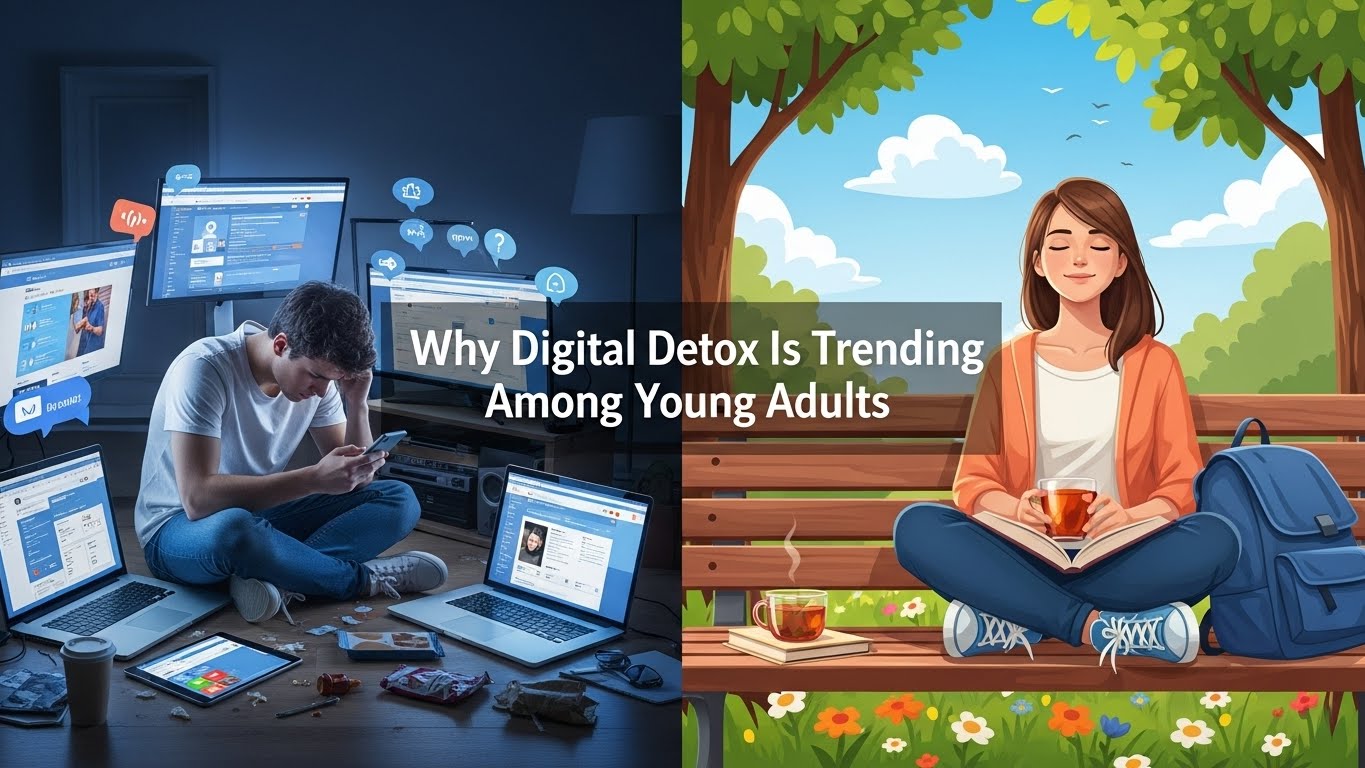
Digital detox has become a popular lifestyle choice among young adults who feel overwhelmed by constant screen exposure and digital demands. Smartphones, social media platforms, and streaming services dominate daily routines, often blurring the line between productivity and distraction. While technology offers convenience and connection, excessive use can lead to screen addiction, stress, and reduced mental wellness. As lifestyle trends shift toward balance and mindfulness, many young adults are intentionally stepping back from screens. Digital detox represents a conscious effort to restore tech balance and improve overall quality of life in an increasingly connected world.
Understanding Digital Detox and Screen Addiction
Digital detox refers to a period during which individuals reduce or completely stop using digital devices such as smartphones, computers, and social media. Screen addiction occurs when excessive screen use interferes with daily life, relationships, and emotional well-being. Many young adults experience constant notifications, pressure to stay online, and fear of missing out, which contributes to digital fatigue. Digital detox helps break these patterns by encouraging intentional use of technology. Understanding screen addiction is the first step toward regaining control and building healthier digital habits.
Impact of Excessive Screen Time on Mental Wellness
Mental wellness is closely affected by prolonged screen exposure. Excessive use of digital devices has been linked to increased stress, anxiety, sleep disruption, and reduced concentration. Social media comparison and information overload can negatively impact self-esteem and emotional health. Digital detox allows the mind to rest and reset, reducing cognitive overload. By stepping away from screens, young adults often experience improved mood, better sleep quality, and enhanced focus. Prioritizing mental wellness is a key reason digital detox is gaining popularity.
Digital Detox as a Growing Lifestyle Trend
Digital detox has evolved into a broader lifestyle trend focused on mindful living. Young adults are increasingly valuing experiences, presence, and authenticity over constant digital engagement. Lifestyle trends such as minimalism, mindfulness, and wellness align naturally with digital detox practices. Activities like reading, exercising, journaling, and spending time outdoors are replacing screen-based habits. Digital detox encourages individuals to reconnect with themselves and their surroundings, making it a meaningful trend rather than a temporary break.
Achieving Tech Balance Through Digital Detox
Tech balance is about using technology in a way that supports rather than controls daily life. Digital detox does not require abandoning technology entirely but emphasizes moderation and purpose. Setting boundaries such as screen-free hours, limiting social media use, and reducing notifications helps restore balance. Young adults are learning to prioritize meaningful digital interactions over endless scrolling. Achieving tech balance through digital detox improves productivity, relationships, and overall well-being.
Benefits of Digital Detox for Young Adults
Digital detox offers numerous benefits that extend beyond reduced screen time. It improves mental clarity, strengthens relationships, and enhances self-awareness. Time away from screens encourages creativity and deeper focus. Many young adults report feeling more present and less stressed after practicing digital detox. This shift supports healthier routines and more intentional living. Digital detox empowers individuals to make conscious choices about how technology fits into their lives.
Common Digital Detox Practices and Their Benefits
| Digital Detox Practice | Focus Area | Key Benefit |
|---|---|---|
| Screen-free hours | Daily routine | Mental relaxation |
| Social media breaks | Online habits | Reduced stress |
| Notification limits | Attention control | Better focus |
| Offline activities | Lifestyle balance | Improved well-being |
| Device-free zones | Personal space | Quality time |
Challenges in Practicing Digital Detox
Practicing digital detox can be challenging due to work demands, social expectations, and habit dependency. Many young adults rely on digital tools for communication and productivity. Fear of missing important updates can create resistance. However, gradual changes make digital detox more manageable. Starting with small steps such as reducing evening screen time helps build confidence. Recognizing that technology can be used intentionally rather than constantly makes the transition easier.
Digital Detox and Social Relationships
Digital detox positively affects social relationships by encouraging deeper, more meaningful connections. Face-to-face conversations and shared experiences become more frequent when screens are minimized. Young adults often find improved communication and stronger bonds during detox periods. Digital detox helps reduce misunderstandings caused by online interactions and promotes emotional presence. This reconnection strengthens both personal and social well-being.
Long Term Effects of Digital Detox
The long-term effects of digital detox include healthier tech habits and improved mental resilience. Young adults who practice regular detox periods develop greater self-control and awareness. Mental wellness improves as stress levels decrease and focus increases. Over time, digital detox becomes part of a balanced lifestyle rather than an occasional break. These long-term benefits support sustainable tech use and overall life satisfaction.
Digital Detox in a Tech Driven Future
As technology continues to evolve, the need for digital detox becomes more relevant. Young adults are recognizing that intentional tech use is essential for mental wellness. Digital detox helps individuals adapt to a tech-driven future without becoming overwhelmed. By embracing tech balance, young adults can enjoy the benefits of technology while protecting their mental and emotional health.
Final Thought
Digital detox is trending among young adults because it offers a practical solution to screen addiction and digital overload. By focusing on mental wellness, restoring tech balance, and embracing healthier lifestyle trends, individuals regain control over their time and attention. Digital detox is not about rejecting technology but about using it mindfully. As awareness grows, digital detox will continue to shape how young adults create balanced, meaningful, and fulfilling lives in a digital world.