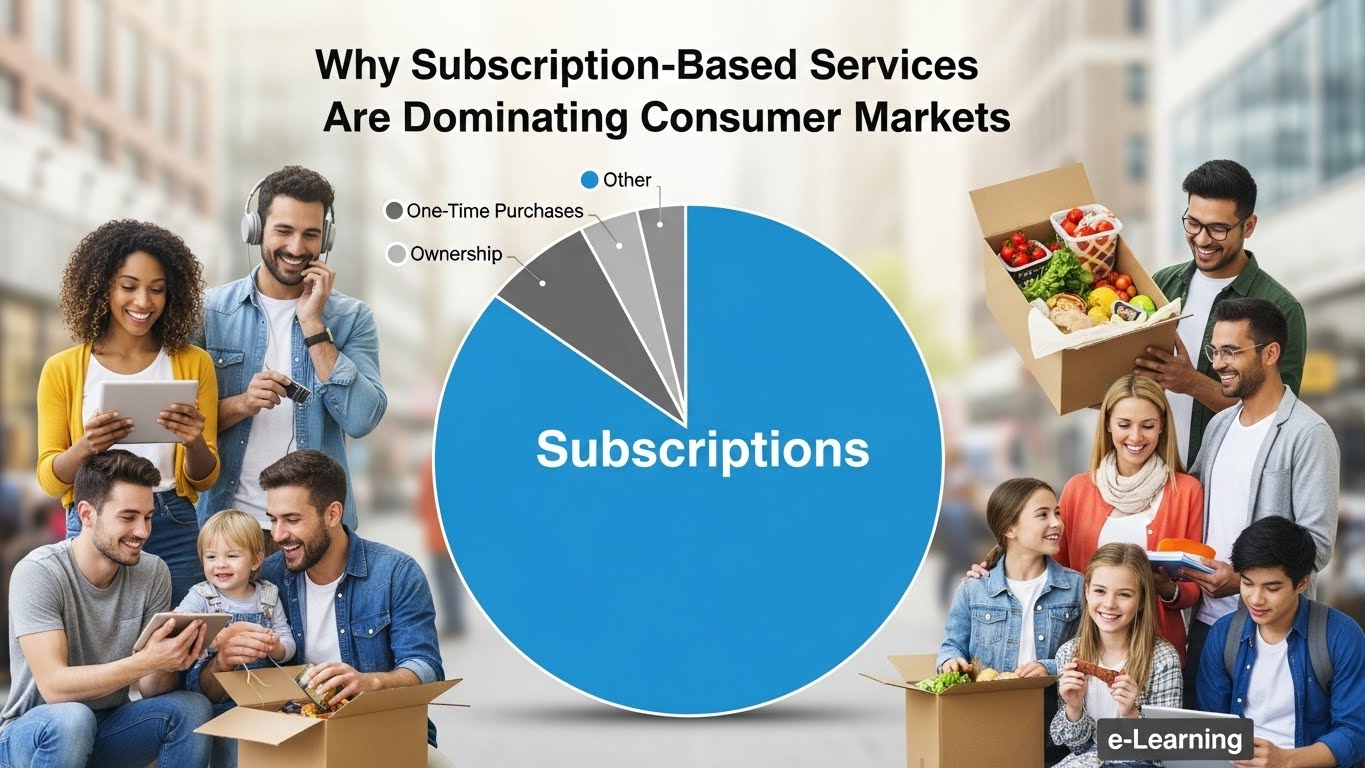
Subscription based services have rapidly become a dominant force in modern consumer markets. From entertainment platforms and software tools to food delivery and fitness programs, subscriptions now shape how people access products and services. Instead of making one-time purchases, consumers increasingly prefer ongoing access through recurring payments. This shift reflects broader consumer trends driven by convenience, personalization, and affordability. The rise of digital services has further accelerated this transformation, making subscription based services a central pillar of the subscription economy and a preferred business model across industries.
Understanding Subscription Based Services and the Subscription Economy
Subscription based services operate on a model where consumers pay recurring fees, usually monthly or annually, in exchange for continued access to products or services. The subscription economy refers to the growing ecosystem of businesses built around this recurring payment model. Unlike traditional sales, subscriptions emphasize long-term relationships rather than single transactions. This approach allows companies to predict revenue more accurately while providing consistent value to customers. As digital services expand, the subscription economy continues to grow, reshaping how businesses design offerings and engage with consumers.
Consumer Trends Driving Subscription Based Services
Changing consumer trends play a major role in the popularity of subscription based services. Modern consumers value flexibility, ease of use, and instant access. Subscriptions eliminate the need for repeated purchasing decisions and reduce upfront costs. Many consumers prefer paying smaller recurring fees instead of large one-time expenses. Subscription based services also adapt well to busy lifestyles by offering automated delivery and seamless access. These trends reflect a shift toward convenience-oriented consumption, where time and simplicity are highly valued.
Role of Digital Services in Subscription Growth
Digital services have been instrumental in the expansion of subscription based services. Cloud computing, mobile apps, and high-speed internet make it easy to deliver content and services continuously. Streaming platforms, software-as-a-service tools, and online learning platforms rely heavily on recurring payments. Digital services allow providers to update features, add content, and personalize experiences without disrupting users. This continuous improvement model enhances customer satisfaction and retention. The scalability of digital services makes subscription based services viable for both startups and global enterprises.
Benefits of Subscription Based Services for Consumers
Subscription based services offer multiple benefits for consumers. Predictable costs help with budgeting and financial planning. Access-based models allow consumers to try and switch services with minimal risk. Subscriptions often include exclusive features, updates, or support that add ongoing value. Personalization is another key benefit, as many services tailor recommendations based on usage patterns. These advantages align with consumer trends favoring customized and hassle-free experiences.
Advantages of Subscription Based Services for Businesses
For businesses, subscription based services provide stable and predictable revenue through recurring payments. This financial consistency supports long-term planning and investment. Customer data collected over time allows companies to understand preferences and improve offerings. The subscription economy also encourages customer loyalty, as ongoing relationships replace one-time interactions. Businesses can experiment with pricing tiers and bundles to attract diverse audiences. This model fosters innovation while reducing reliance on constant new customer acquisition.
Common Subscription Based Services and Their Benefits
| Subscription Type | Industry | Key Benefit |
|---|---|---|
| Streaming platforms | Entertainment | On-demand access |
| Software services | Technology | Regular updates |
| Fitness subscriptions | Health and wellness | Convenience |
| Meal delivery plans | Food services | Time saving |
| Learning platforms | Education | Continuous skill growth |
Impact of Recurring Payments on Consumer Behavior
Recurring payments influence how consumers perceive value and commitment. Automatic billing reduces friction, making it easier to maintain long-term subscriptions. However, it also encourages consumers to be more selective about the services they keep. Transparency and flexibility are crucial to maintaining trust. Subscription based services that offer easy cancellation and clear pricing are more likely to succeed. Recurring payments create a sense of continuity that aligns with modern consumption habits.
Challenges in the Subscription Economy
Despite its growth, the subscription economy faces challenges. Subscription fatigue can occur when consumers feel overwhelmed by too many recurring payments. Retention becomes a critical metric, as customers can cancel easily. Businesses must consistently deliver value to justify ongoing costs. Pricing strategies must balance affordability with profitability. Managing customer expectations is essential for sustaining subscription based services in competitive markets.
Innovation and Personalization in Subscription Models
Innovation drives the success of subscription based services. Companies are experimenting with flexible plans, usage-based pricing, and bundled offerings. Personalization enhances user experience by tailoring content and services to individual preferences. Data analytics helps businesses refine recommendations and anticipate needs. These innovations strengthen the relationship between providers and consumers. As consumer trends evolve, subscription models continue to adapt to meet changing expectations.
Long Term Outlook of Subscription Based Services
The long-term outlook for subscription based services remains strong. As digital services continue to expand, more industries are adopting subscription models. Consumer comfort with recurring payments is increasing, especially among younger generations. The subscription economy supports sustainable growth by focusing on retention and value creation. Businesses that prioritize transparency, quality, and flexibility are well-positioned to succeed in this evolving landscape.
Final Thought
Subscription based services are dominating consumer markets because they align perfectly with modern consumer trends and digital lifestyles. Through the subscription economy, recurring payments, and innovative digital services, businesses and consumers benefit from convenience, flexibility, and ongoing value. While challenges exist, the advantages of subscription based services continue to drive adoption across industries. As expectations for seamless access and personalized experiences grow, subscription models will remain a powerful force shaping the future of consumer markets.